Pionex Exchange Review 2026: Hands-on Test of Fees, Bots, Safety & KYC

Pionex launched in 2019 as a centralized exchange and publicly states it holds a U.S. MSB registration. Availability and product access differ by region. The platform presents a hybrid model with free built‑in trading bots and a flat 0.05% maker and taker fee. In our hands‑on tests, orders were routed through an internal system that aggregates liquidity from external venues. Pricing felt competitive in calm markets, while native depth thinned during periods of fast volatility. Public claims point to a multi‑million global user base, though reported figures vary by source.
low-cost spot trading
slowdowns with KYC and cash-outs
On this page
Affiliate Disclosure
Some of the platforms we review pay us a commission if you register or take certain actions through our links. This helps fund our work. It doesn’t affect our opinions, how we test platforms, or our review scores. We apply the same criteria to every service we cover.
Editorial Independence and Transparency
Our goal is simple: provide clear, honest reviews of crypto exchanges and trading tools. To keep the lights on, we sometimes use affiliate links. If you sign up through one of them, we may earn a commission.
This helps support our testing setup and editorial staff, but it doesn’t shape our verdicts. We base every review on our own testing and verified data – not on who we partner with.
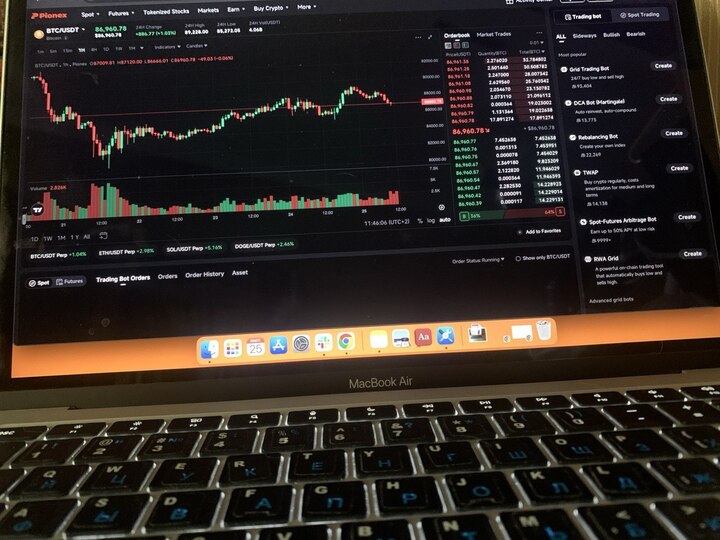
We approached this as users, not as PR. We opened an account, funded it, and placed several $200 test trades. We measured fees, checked order execution, tried the built‑in bots, and contacted support. Below is a practical take on where Pionex shines and where it needs work.
Key Features and What Makes Pionex Unique
If you value automation and low costs, Pionex’s core pitch is compelling. The platform charges a simple 0.05% maker and taker fee, and ships with more than a dozen free bots, including grid, DCA, rebalancing, and a spot‑futures arbitrage tool. What sets it apart is the “batteries‑included” approach. You do not have to wire up external bot services or pay extra subscriptions. For readers specifically wondering is Pionex good, the short answer is yes for casual spot traders who want a guided way to automate entries and ranges.
From our live tests, pricing on majors like BTC and ETH felt competitive in calm markets. Pionex aggregates quotes and depth from external venues which helps keep spreads tight most of the time. The trade‑off is that true native depth is thinner than on top tier terminal‑style exchanges. During volatile spikes we noticed wider spreads and more slippage than on the biggest books.
Interface and Performance
The first launch is friendly. The terminal uses TradingView charts, clear position panels, and bot presets that walk you through parameters. Creating a simple grid or DCA strategy takes a minute, and the preview shows expected ranges and allocations. Page loads and chart updates were smooth on desktop and acceptable on mobile. In our suite of Pionex reviews across devices, order tickets submitted without lag and fills arrived quickly in normal conditions.
Advanced manual controls are present but basic. Market and limit orders are here, along with simple stops. If you rely on native OCO or bracket orders for discretionary trading, you may find the toolkit limited. API access is available and works as expected for monitoring and light automation. For most beginners and semi‑active users, the platform balances clarity with enough power to experiment safely at small sizes.
User Experience and Support
Onboarding was straightforward. KYC approval took under an hour for one tester and longer for another during peak time. Fiat on and off ramps exist in select regions through third‑party providers. Crypto deposits were credited after network confirmations and were withdrawable once standard risk checks cleared. In our Pionex reviews round‑trip, one withdrawal was processed within minutes and another queued longer during routine compliance screening.
Support quality is mixed. The help center covers fees, pairs, and both basics well. Ticket replies ranged from quick to slow depending on the queue. We also noted community reports about delayed withdrawals or temporary freezes during reviews. These are typical pain points for mid‑tier centralized exchanges and worth factoring into your risk management if you plan to keep balances on‑platform.
Pros and Cons of Using Pionex
We reviewed Pionex’s spot setup and liquidity design. Quotes and depth are aggregated from outside venues such as Binance and Huobi, which keeps pricing tight on major pairs when markets are calm. The catalog typically includes 300+ assets with several hundred spot pairs. Fiat on‑ and off‑ramps are available in select regions through third‑party providers.
Pros
What stood out in testing:
- Very low, simple fees at 0.05% for maker and taker, plus 16+ built‑in bots for grid, DCA, rebalancing, and spot‑futures arbitrage.
- Competitive pricing on majors due to aggregated liquidity. TradingView charts and guided bot presets make setup straightforward.
- Low minimums and a clear cost structure, with API access that works well for light automation.
- Public reserve attestations and audit statements increase basic transparency.
Cons
Where the experience can suffer:
- Execution quality depends on external venues. During fast markets, spreads widen and slippage can increase.
- Availability varies by region, and KYC or withdrawals may take longer than expected. Support responses can be slow under load.
- Manual pro tooling is thinner than on terminal‑style exchanges. Some pairs or features are limited by jurisdiction.
- Proof‑of‑reserves updates are not continuous in a Merkle‑tree format across every asset.
Safety, Transparency, and Legal Notes
Pionex offers two factor authentication, email confirmations, and withdrawal address whitelists. The company has published reserve attestations and a Merkle‑style proof‑of‑reserves system. Treat these as transparency tools, not guarantees. Accounts are not FDIC insured. The team states it holds a U.S. MSB registration. Availability and product access vary by region.
Blockport Rating: How We Scored Pionex
We weight categories with a focus on the spot experience. Scores reflect our hands‑on testing plus public information at the time of writing.
| Criteria | Rating (out of 5) |
|---|---|
| Liquidity & Volume | 3 |
| Fees & Total Cost to Trade | 5 |
| Asset Selection & Trading Pairs | 4 |
| Execution Quality / Market Quality | 4 |
| Tools & Order Controls | 3 |
| Fiat Access & Minimum Trade Size | 3 |
| Reliability & Transparency | 2 |
Why 3.4 overall? Fees are excellent and automation is a genuine differentiator. Execution is good in normal markets, less so in fast tape. Depth and product availability vary by region, and support can be slow under load. For small to mid‑size spot traders who want guided automation, the package is attractive. Long‑term holders should prefer self‑custody for security and peace of mind.
Methodology: How We Tested
We use a weighted category model. We collected standardized data, placed real test trades, measured spreads and slippage, checked minimum trade sizes, and verified UI behavior on desktop and mobile. We also looked at reserve attestations and service‑status pages. Ratings capture user experience. They are not statements about solvency or future results.
Data Collection Protocol
- Open-Source Audit: We scrutinize public documentation, including fee schedules, supported pair lists, Proof-of-Reserves (PoR) attestations, and historical status page uptime.
- Live Market Verification: We go beyond the whitepaper. We act as mystery shoppers, placing real test trades (in this case, $200) to measure spread tightness, quantify slippage, and stress-test order execution speeds.
Important Disclaimer: Our ratings reflect user experience, operational features, and market quality. We do not conduct forensic financial audits and cannot guarantee the long-term solvency or balance-sheet health of the entities we review.
Categories & Weights
– Liquidity & Volume – 25%
– Fees & Total Cost to Trade – 25%
– Asset Selection & Trading Pairs – 15%
– Execution Quality (Market Quality) – 10%
– Tools & Order Controls – 10%
– Fiat Access & Minimum Trade Size – 5%
– Reliability & Transparency – 10%
Competitors for further research: coinbureau.com, cryptoninjas.net, coinsutra.com – useful for perspective, yet our view is based on direct testing and documentation rather than vendor claims.
Content on BlockPort is provided for informational purposes only and does not constitute financial guidance.
We strive to ensure the accuracy and relevance of the information we share, but we do not guarantee that all content is complete, error-free, or up to date. BlockPort disclaims any liability for losses, mistakes, or actions taken based on the material found on this site.
Always conduct your own research before making financial decisions and consider consulting with a licensed advisor.
For further details, please review our Terms of Use, Privacy Policy, and Disclaimer.
Articles by this author