eToro Crypto Review 2026: Is It Good for Trading Crypto?

eToro is a regulated, beginner-friendly platform that in our tests felt more like a social app than a classic exchange. CopyTrader, Smart Portfolios, and a demo account made it very easy for us to place first trades and mirror other strategies without much setup. The trade-off is cost and control: you pay a flat 1% fee on crypto trades, there’s no margin or derivatives for active traders, and you’re reliant on the custodial eToro Money wallet, which doesn’t offer on-chain proof of reserves.
beginner & social trading
higher fees, no margin, custodial wallet
On this page
Affiliate Disclosure
Some of the platforms we review pay us a commission if you register or take certain actions through our links. This helps fund our work. It doesn’t affect our opinions, how we test platforms, or our review scores. We apply the same criteria to every service we cover.
Editorial Independence and Transparency
Our goal is simple: provide clear, honest reviews of crypto exchanges and trading tools. To keep the lights on, we sometimes use affiliate links. If you sign up through one of them, we may earn a commission.
This helps support our testing setup and editorial staff, but it doesn’t shape our verdicts. We base every review on our own testing and verified data – not on who we partner with.
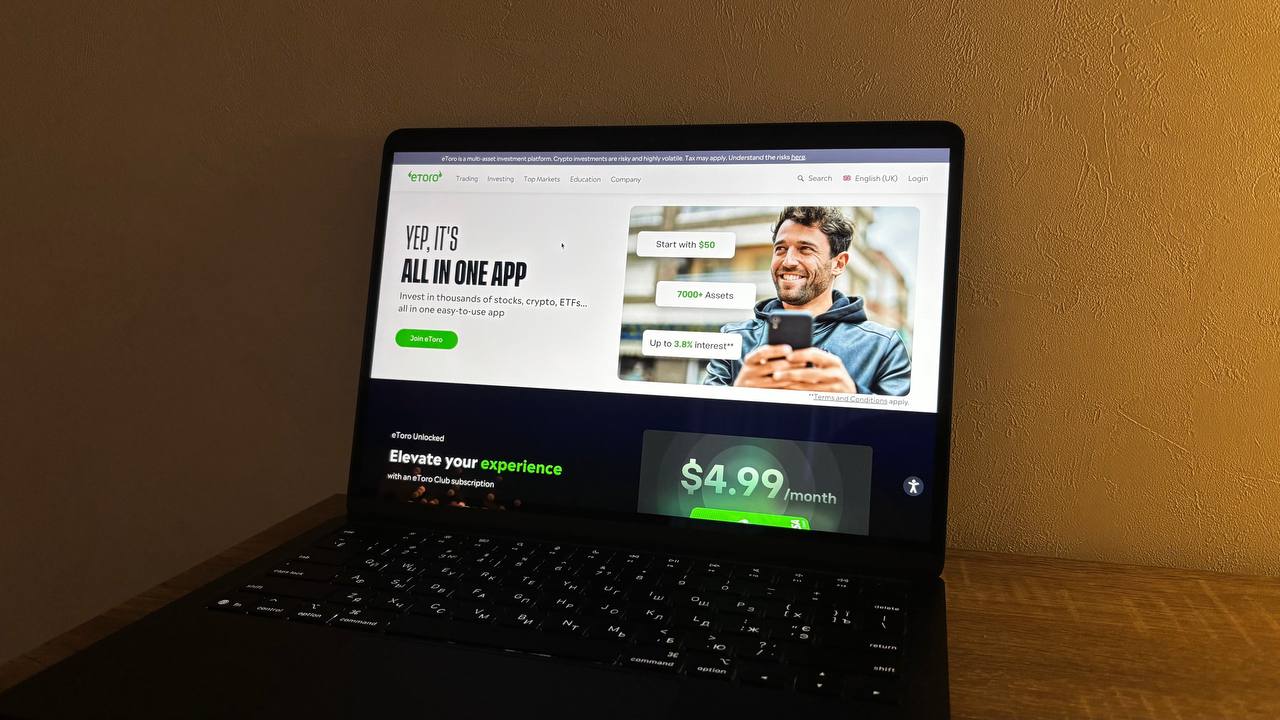
The Blockport analysts tested eToro’s crypto platform to assess fees, spreads, and usability across web and mobile. We checked staking rewards, wallet limits, and regulation updates under MiCA, then rated the platform 3.5/5 to learn when eToro makes sense for beginners, and when cheaper exchanges do better.
What Is eToro?
eToro is a global multi-asset investment platform with social features. Founded in 2007, it now serves over 25 million clients in about 75 countries. Its core idea is social trading: users can engage through a news feed, follow other traders, and automatically copy their strategies with CopyTrader and Smart Portfolios.
On eToro, you can trade stocks, ETFs, options, and cryptocurrencies, including fractional shares. The platform offers over 100 cryptocurrencies and thousands of stocks and ETFs, with availability varying by country.
Trading stocks, ETFs, and options is commission-free, while crypto trades include a fixed 1% fee plus spread. The minimum deposit is $50, and eToro also supports staking for select coins and provides its own mobile wallet, eToro Money.
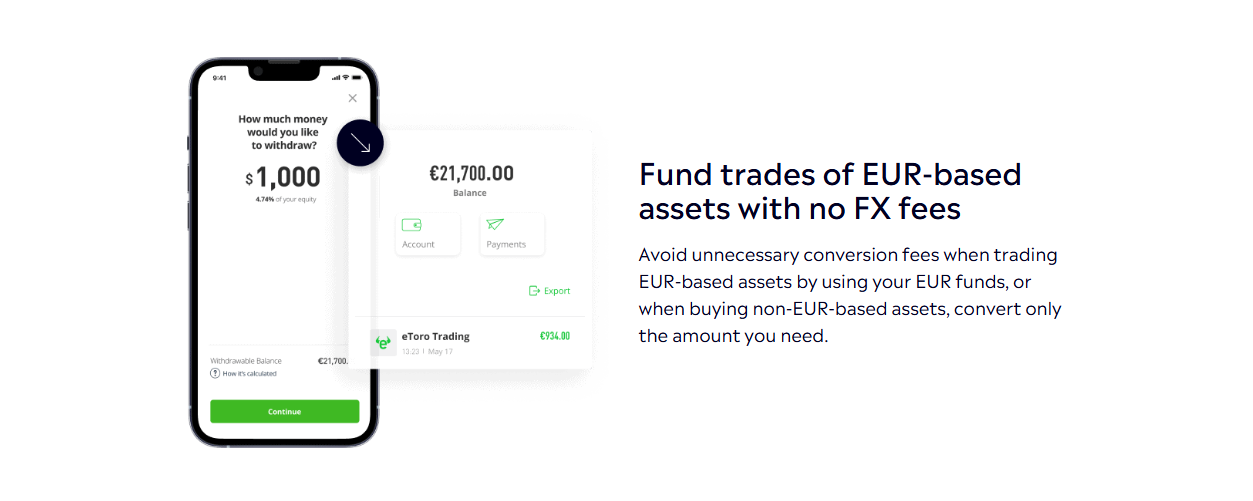
To the question “Is eToro a good trading platform?” the short answer is yes for beginners and passive investors. It’s a strong choice for those who value a simple interface, social features, and access to both stocks and crypto in one app.
The Blockport team recommends it mainly for new and social traders. Advanced users may find the lack of margin trading, futures, and deep analytics.
Security, Regulation, and Wallet Options
eToro is regulated by several authorities. In the United States, its brokerage arm, eToro USA Securities Inc., is registered with the SEC and is a member of FINRA. Client assets in stocks and ETFs are protected by SIPC insurance up to $500,000, including $250,000 in cash.
Its clearing partner, Apex, provides additional coverage of up to $37.5 million in securities and $900,000 in cash per client. The crypto division, eToro USA LLC, is registered as a Money Services Business with FinCEN, but crypto assets are not insured by the FDIC or SIPC.
In Europe, the platform operates through eToro (Europe) Ltd., a licensed entity. In February 2025, it received a CySEC license under the MiCA framework and passed a SOC 2 Type II cybersecurity audit. The platform uses two-factor authentication and biometrics, with part of its assets stored in cold wallets. There have been no reports of major security breaches.
For crypto trading, eToro offers the eToro Money wallet for iOS and Android. During our hands-on testing, we found that it supports about 39 coins, but only seven can be transferred from the trading account to the wallet. Transfers carry a 2% fee and are one-way – funds cannot be returned to the trading account.
The wallet is custodial and does not give users private keys, making it convenient for beginners but limiting control over funds – a key consideration in eToro pros and cons for advanced traders.
User Experience and Customer Support
We registered with eToro to test its web and mobile platforms. Here’s what we found.
The interface is straightforward: a feed of ideas, an asset list, and separate tabs for the portfolio and CopyTrader. The desktop and mobile layouts are almost identical, making it easy to switch between devices. Charts can be switched to advanced ProCharts mode with indicators and TradingView integration.
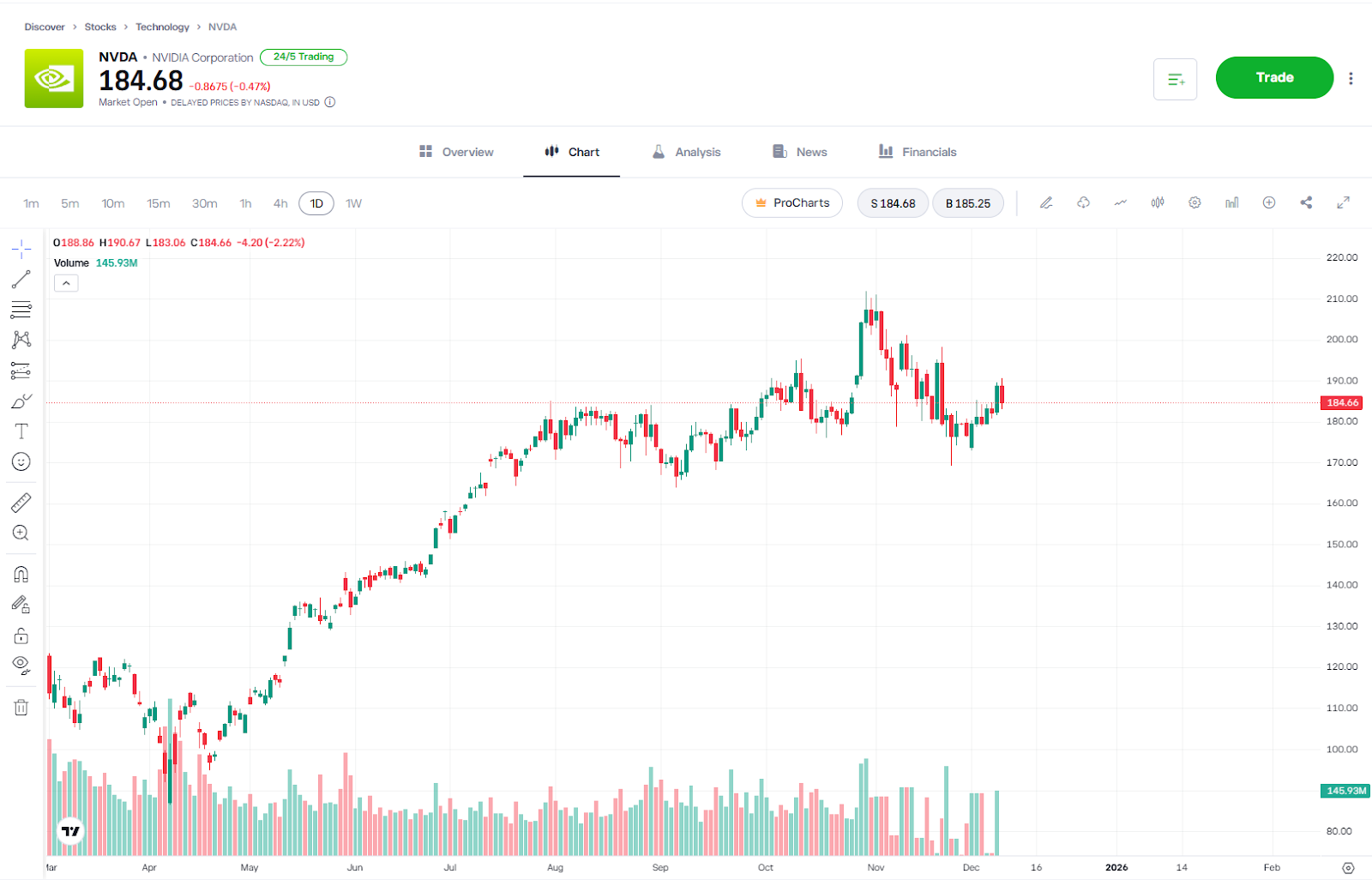
Customer support is a mixed experience. Officially, the platform offers 24/7 chat and email support, along with a detailed help center that includes FAQs and educational materials. In practice, reviews often cite difficulties reaching a live agent and long delays in resolving withdrawal issues. Our inquiry was answered within seven minutes.
Is eToro good for crypto? In terms of interface, yes. It’s user-friendly for beginners, but expect occasional delays and some bureaucracy when dealing with support.
Pros and Cons of Using eToro
In this eToro review, we examine the platform’s crypto trading quality, fees, and overall user experience. With one account, users can access more than 6,000 stocks, hundreds of ETFs, and over 100 cryptocurrencies, along with social trading through CopyTrader and prebuilt Smart Portfolios. Below are the key eToro pros and cons for crypto traders.
Pros
- Social trading. CopyTrader lets you mirror up to 100 traders at once, while Smart Portfolios support passive strategies. A free $100,000 demo account is available for practice.
- Multiple assets in one app. Trade stocks, ETFs, options, and 100+ cryptocurrencies, including fractional shares and themed crypto portfolios.
- Interface. A clean, unified layout across web and mobile, with ProCharts mode, TradingView integration, and a social-style feed for ideas and discussions.
- Staking. Supports staking for ADA, ETH, SOL, and other coins with automatic rewards and no complex wallet or node setup.
- Transparent fees. Fixed 1% crypto trading fee, zero commission on stocks and ETFs, and no deposit fees.
Cons
- Costly for active crypto traders. A 1% fee on every buy and sell, plus spreads, a $5 withdrawal fee, roughly 2% for transfers to eToro Money, currency conversion costs, and a $10 monthly inactivity fee.
- Limited tools for advanced traders. No crypto-to-crypto pairs, margin trading, or shorting. Order types and analytics are basic compared to professional exchanges, limiting advanced strategies.
- Regional and technical limits. Crypto trading is unavailable in some U.S. states. New American users can trade only BTC, ETH, and BCH. The eToro Money wallet supports 39 coins, but only seven can be withdrawn from the trading account, and transfers are one-way.
Trustworthiness Check
Here’s what we found on eToro’s regulation, security, and asset storage.
- In February 2025, eToro (Europe) Ltd obtained a MiCA license from CySEC and completed a SOC 2 Type II audit of its custodial operations. On its Regulation & License and Investor Protection pages, the company notes supervision by the FCA and CySEC and confirms that client funds are held in segregated accounts. However, it does not publish on-chain proof of reserves.
- In September 2024, eToro USA LLC reached a $1.5 million settlement with the SEC for operating as an unregistered broker and clearing agency in connection with certain crypto assets. As part of the agreement, the company ended most trading of tokens deemed securities by the regulator, leaving only BTC, ETH, and BCH available to U.S. users.
- In 2020, a database containing roughly 62,000 eToro accounts with login credentials and personal information was posted for sale on hacker forums. Similar “eToro investor database” listings reappeared in 2023 and 2024. The company maintained that its systems were not breached but did not disclose details of its investigation.
Blockport’s Overall eToro Rating
| Criteria | Rating (out of 5) |
|---|---|
| Liquidity & Volume | 3 |
| Fees & Total Cost to Trade | 2 |
| Asset Selection & Trading Pairs | 4 |
| Execution Quality / Market Quality | 3 |
| Tools & Order Controls | 4 |
| Fiat Access & Minimum Trade Size | 5 |
| Reliability & Transparency | 4 |
Our Review Framework: How We Rate
To ensure consistency across all evaluations, we use a structured scoring system. Each rating combines independent research with hands-on platform testing to produce a final score on a 1.0–5.0 scale with 0.1-point precision.
How We Collect and Verify Data
- Platform and documentation analysis: we review Binance’s public materials, including fee tables, asset listings, system status logs, regulatory disclosures, and security documents, to verify how the platform functions in practice.
- Live market testing: we execute real trades to assess spreads, slippage, order execution, and overall platform friction. Testing in live conditions shows how Binance performs beyond its advertised claims.
Our scores reflect user experience, feature depth, and platform performance. We do not evaluate corporate solvency or make predictions about long-term financial stability.
Categories & Weights
- Liquidity & Volume – 25%
- Fees & Total Cost to Trade – 25%
- Asset Selection & Trading Pairs – 15%
- Execution Quality (Market Quality) – 10%
- Tools & Order Controls – 10%
- Fiat Access & Minimum Trade Size – 5%
- Reliability & Transparency – 10%
Content on BlockPort is provided for informational purposes only and does not constitute financial guidance.
We strive to ensure the accuracy and relevance of the information we share, but we do not guarantee that all content is complete, error-free, or up to date. BlockPort disclaims any liability for losses, mistakes, or actions taken based on the material found on this site.
Always conduct your own research before making financial decisions and consider consulting with a licensed advisor.
For further details, please review our Terms of Use, Privacy Policy, and Disclaimer.
Articles by this author