WhiteBIT Reviews 2026: Is this Exchange Good for Spot Trading?

WhiteBIT is a centralized crypto exchange launched in 2018 and now operating from Vilnius, Lithuania. For this review, we did not just read fee tables and marketing pages. Instead, the Blockport team ran a full account setup, passed verification and executed a $200 BTC/USDT spot purchase to test how the platform performs in day-to-day use.
entry-level and casual spot traders who want a simple, no-frills experience
higher costs fees on fiat deposits and withdrawals, and thinner order books on lesser-traded pairs
On this page
Affiliate Disclosure
Some of the platforms we review pay us a commission if you register or take certain actions through our links. This helps fund our work. It doesn’t affect our opinions, how we test platforms, or our review scores. We apply the same criteria to every service we cover.
Editorial Independence and Transparency
Our goal is simple: provide clear, honest reviews of crypto exchanges and trading tools. To keep the lights on, we sometimes use affiliate links. If you sign up through one of them, we may earn a commission.
This helps support our testing setup and editorial staff, but it doesn’t shape our verdicts. We base every review on our own testing and verified data – not on who we partner with.
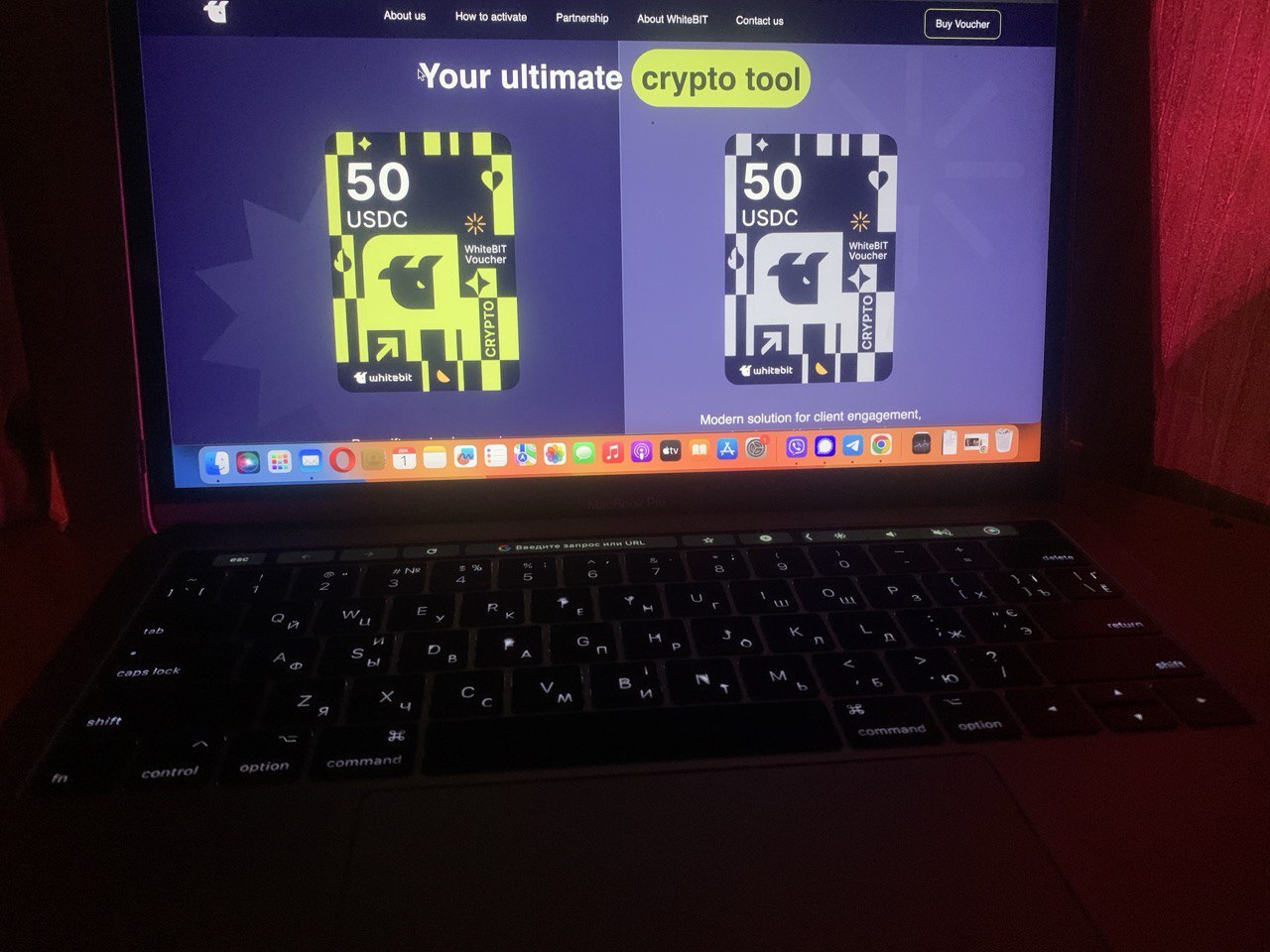
In this hands-on WhiteBIT review, Blockport journalists opened an account, completed KYC and placed a live $200 spot trade to see how the platform holds up in real use. Below we share what we learned about the interface, asset coverage, pricing and day-to-day user experience.
During our test, the core experience felt stable. Orders went through quickly, navigation felt intuitive, and we had no major issues funding the account or placing trades. At the same time, the total cost of card deposits, the liquidity on some minor pairs and the lack of access for U.S. residents are real drawbacks that keep WhiteBIT from scoring higher.
WhiteBIT Numbers (our reference point for this test):
- 300+ listed assets
- Coverage in more than 190 countries and regions
- Average daily spot volume reported around $2.5 billion
User Interface & Navigation
In this section of our WhiteBIT review, we focus on how it actually feels to use WhiteBIT every day. Our $200 BTC/USDT spot purchase gave us a clear look at the registration flow, verification, web interface and mobile apps.
Account creation is quick: we signed up with email, confirmed the address and went straight into the KYC process. Identity checks are done through standard document upload and selfie verification. In our case, approval arrived within the same day, after which all trading and funding options became available.
On the desktop, the main trading screen uses a familiar layout: market list on the left, central price chart, order book and recent trades, with the order ticket on the right. It is not the most minimal design we have seen, but the elements are logically grouped, and we placed our first $200 market order without any friction. The confirmation window showed the estimated fee upfront and size of the purchase before we clicked “Buy”.
The mobile apps mirror the desktop layout fairly closely. During our test, switching between markets, checking balances and reviewing order history felt smooth. We did not experience noticeable lag or crashes on either iOS or Android. Some advanced settings are easier to access on the web, everyday tasks – like placing spot orders or monitoring positions – are perfectly manageable from a phone.
Overall, WhiteBIT’s interface feels solid rather than exceptional. New users should be able to find their way around after a short learning period, and more experienced traders will recognise a layout similar to many other centralized exchanges.
Asset Coverage
For us at Blockport, a proper WhiteBIT reviews means looking beyond screenshots and listing what you can actually trade. WhiteBIT currently offers more than 300 cryptocurrencies and tokens, along with a mix of fiat and stablecoin pairs.
On the spot side, we counted a healthy range of markets anchored to USDT, BTC and several regional fiat currencies. Major coins like BTC, ETH and popular altcoins are present, along with a decent selection of DeFi, gaming and infrastructure projects. For most retail spot traders, this will be enough to build and rebalance a diversified portfolio.
WhiteBIT also provides margin and USDT-settled futures for a subset of assets. During our review, we noted that the derivatives list is noticeably shorter than the spot board, which is pretty normal for exchanges of this size. Leverage of up to 10x on margin and up to 100x on certain futures pairs is available, but we would emphasise that those limits are geared toward experienced traders who understand the risks.
Liquidity is where coverage and usability intersect. On our $200 BTC/USDT market buy, spreads were tight and depth in the order book was more than sufficient – the order was filled instantly with negligible slippage. On smaller altcoin pairs, however, we saw thinner books and wider spreads, which can be a problem for larger orders or for traders who rely heavily on market orders in illiquid names.
In summary, asset coverage is a plus for WhiteBIT at the spot level, with a typical mid-sized selection in derivatives. The main limitation is not so much the number of tickers as it is the uneven liquidity once you move away from the main trading pairs.
Pricing & Fee Dynamics
No honest WhiteBIT exchange review can ignore the cost of trading. WhiteBIT advertises a baseline spot commission of 0.1% for makers and takers, with the potential to reduce this rate by holding and using the exchange’s native WBT token. That part largely checked out in our $200 test trade: the fee we paid for the BTC/USDT purchase aligned with the posted schedule.
Where things get more complicated is the total cost of using the platform. Spreads, funding methods and promotions all play a role.
On heavily traded pairs like BTC/USDT and ETH/USDT, spreads were narrow during our test, which helped keep the overall cost of our $200 order close to the nominal fee. On less active pairs, we saw wider spreads that could materially increase slippage for market orders. Traders who frequently rotate into small-cap tokens should factor this into their cost calculations.
Fiat rails are another important factor. For our hands-on review we opted to fund the account in crypto to avoid additional card or bank transfer fees. Looking at the published tables, card deposits and withdrawals typically fall in the 0.7%–1.5% range depending on currency and provider. That is not outrageous by industry standards, but it does make frequent small fiat deposits relatively expensive.
WhiteBIT attempts to offset some of these costs with loyalty-style features: fee discounts for WBT holders, interest-bearing products, trading competitions and launch events. In practice, these can be useful if you are an engaged, recurring user of the platform, but they do not fundamentally change the core economics for someone making only occasional trades.
Our takeaway from the Blockport test is that WhiteBIT is price-competitive for users who trade mainly between crypto assets and are willing to fund in stablecoins or major coins. It is less attractive for those who rely heavily on fiat gateways or who frequently trade illiquid markets where spreads can be a bigger drag than the posted fee.
Pros and Cons of Trading on WhiteBIT
Before we land on a final score, it helps to lay out the main strengths and weaknesses we observed during our test trading and broader review. The points below reflect both what worked smoothly for us in day‑to‑day use and where we think WhiteBIT could improve for different types of traders.
Pros
Where WhiteBIT works well
- Strong security measures and extensive cold storage.
- Consistent, familiar interface on web and mobile.
- Spot, margin and USDT-settled futures available.
- Extra yield via interest, tournaments and launches.
- Demo trading with virtual balances for beginners.
- Support for several fiat currencies and cards.
- Active development around WBT and pro services.
Cons
Things to keep in mind
- Margin markets support fewer assets than spot.
- Thin books and wider spreads on small pairs.
- Fiat deposits and withdrawals are relatively expensive.
- Not available to users in the United States.
- Fewer supported fiat currencies than top rivals.
Summary
So, what is WhiteBIT from the perspective of Blockport’s spot trading test?
First, the basics work as advertised. Account creation and verification were straightforward, the interface behaved consistently across web and mobile, and our test order executed quickly with transparent fee information. We did not encounter unexpected freezes or hidden charges during the process.
Second, the platform offers a broad enough mix of assets and order types for most spot-focused strategies. The limitations become more visible when you move into thinner markets or try to rely on the exchange as a primary fiat on-ramp. That is where higher gateway fees and patchy liquidity stand out.
Third, regulatory coverage and geography matter. WhiteBIT is not licensed to serve U.S. residents and may have restrictions in other regions, so some readers simply will not be able to use it as their main venue regardless of the product mix.
Putting it all together, our category scores from this hands-on review are:
| Criteria | Rating (out of 5) |
|---|---|
| Liquidity & Volume | 3.7 |
| Fees & Total Cost to Trade | 3.6 |
| Asset Selection & Trading Pairs | 3.8 |
| Execution Quality / Market Quality | 3.4 |
| Tools & Order Controls | 4.6 |
| Fiat Access & Minimum Trade Size | 3.9 |
| Reliability & Transparency | 4.5 |
Averaged and weighted, these factors produce our overall rating of 4.1 / 5. For Blockport readers, we would summarize it this way: WhiteBIT is a workable choice if you mainly trade mainstream coins, prefer a familiar interface and are happy to treat fiat funding as an occasional tool rather than a constant habit. If you need the absolute lowest costs on card deposits, the deepest liquidity on small caps or full access from the U.S., you may want to compare alternatives alongside WhiteBIT before deciding where to trade.
How Blockport Tested WhiteBIT
Our approach to WhiteBIT reviews follows a simple, repeatable framework across all exchanges we cover. For WhiteBIT, the process included:
- Opening a fresh account, completing KYC and securing the account with 2FA.
- Funding the account and placing a live $200 BTC/USDT spot trade to observe spreads, execution speed and actual fees charged.
- Exploring the web platform and mobile apps to assess usability, navigation and basic settings.
- Reviewing available documentation on fees, supported markets, security practices and regulatory registrations.
- Reading a sample of recent user feedback to cross-check our impressions against other traders’ experiences.
We do not audit the solvency of WhiteBIT or provide investment advice. Instead, our goal is to give you a clear, experience-driven view of how the exchange performs in practice so you can decide whether it aligns with your own trading priorities and risk tolerance.
How We Rate
To ensure consistency across all evaluations, we use a structured scoring system. Each rating combines independent research with hands-on platform testing to produce a final score on a 1.0–5.0 scale with 0.1-point precision.
How We Collect and Verify Data
- Platform and documentation analysis: we review Binance’s public materials, including fee tables, asset listings, system status logs, regulatory disclosures, and security documents, to verify how the platform functions in practice.
- Live market testing: we execute real trades to assess spreads, slippage, order execution, and overall platform friction. Testing in live conditions shows how Binance performs beyond its advertised claims.
Our scores reflect user experience, feature depth, and platform performance. We do not evaluate corporate solvency or make predictions about long-term financial stability.
Categories & Weights
- Liquidity & Volume – 25%
- Fees & Total Cost to Trade – 25%
- Asset Selection & Trading Pairs – 15%
- Execution Quality (Market Quality) – 10%
- Tools & Order Controls – 10%
- Fiat Access & Minimum Trade Size – 5%
- Reliability & Transparency – 10%
Content on BlockPort is provided for informational purposes only and does not constitute financial guidance.
We strive to ensure the accuracy and relevance of the information we share, but we do not guarantee that all content is complete, error-free, or up to date. BlockPort disclaims any liability for losses, mistakes, or actions taken based on the material found on this site.
Always conduct your own research before making financial decisions and consider consulting with a licensed advisor.
For further details, please review our Terms of Use, Privacy Policy, and Disclaimer.
Articles by this author