Polymarket Asks CFTC to Let U.S. Traders Access Main Exchange
Polymarket asked the CFTC to permit U.S. customers to trade directly on its main international exchange rather than through intermediaries.
Polymarket has asked the Commodity Futures Trading Commission to allow U.S. customers to trade directly on the company’s main international exchange, seeking permission to open the same platform used by non-U.S. users.
The company has been operating in the U.S. under an amended CFTC order issued in November 2025 that permits a federally regulated, intermediated trading model through futures commission merchants and brokerages. Polymarket relaunched a limited, invite-only U.S. product in December 2025. Company executives concluded the separate domestic product did not scale and instead requested direct access to the global exchange.
Polymarket’s work to re-enter the U.S. market followed regulatory actions in 2022 when the company paid a $1.4 million CFTC civil penalty and left the U.S. market. The firm then focused on international growth, clearing roughly $3 billion in monthly trades by October 2025. In July 2025 the CFTC and the Department of Justice closed separate investigations without bringing new charges. Days later Polymarket acquired QCEX, a CFTC-licensed exchange and clearinghouse, for $112 million to build legal infrastructure for U.S. operations. Intercontinental Exchange committed up to $2 billion and completed about $1.64 billion in direct investment. By February 2026 Polymarket’s valuation was about $9 billion.
Polymarket also upgraded its technology, rolling out CTF Exchange V2 and introducing a collateral token called pUSD that is backed one-to-one by USDC. In March 2026 the company recorded more than $10 billion in monthly trading volume on its main platform while U.S. retail customers remained excluded.
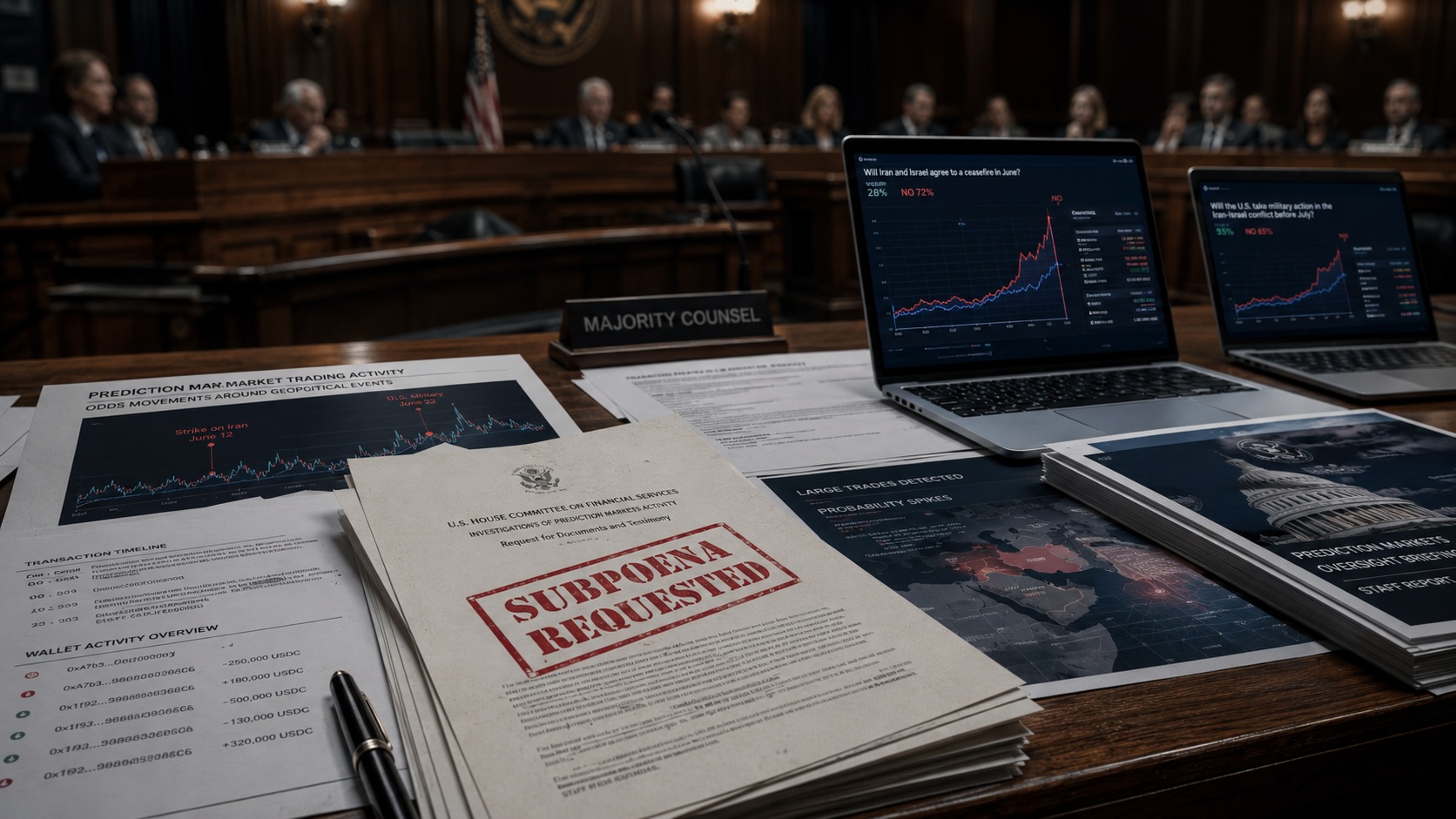
Regulatory enforcement and national security concerns are part of the current backdrop. On April 23 the CFTC filed an insider-trading complaint alleging a U.S. service member used classified information to buy positions on a contract tied to the removal of Nicolás Maduro and realized more than $400,000 in profit; the Department of Justice filed parallel criminal charges. Investigators have reported other probes involving military personnel. An interrogated Israeli air force crew member stated, “the entire squadron is on Polymarket, the entire air force is betting.” The platform removed a market on nuclear detonations after about $850,000 in positions were placed when the Iran conflict began.
State and international actions add complexity. The Nevada Gaming Control Board sued Polymarket in January 2026 over offering event contracts without a state gaming license. Massachusetts courts have ruled similar contracts qualify as illegal sports wagering. A U.S. competitor faces 19 active state actions. The CFTC and DOJ have sued Arizona, Connecticut and Illinois over state enforcement against federally regulated prediction market platforms; one appeal went in favor of platforms. Portugal banned Polymarket in March 2026 and Brazil imposed a ban on April 26, 2026.
The CFTC’s staff level has declined about 24% since the start of the previous presidential administration to around 535 employees. Under current rules, CFTC-approved prediction market platforms self-certify that individual market offerings comply with federal requirements rather than submitting each contract for agency review.
The CFTC is reviewing Polymarket’s request while the agency processes its first event-contract insider-trading case and state regulators pursue enforcement actions.
Content on BlockPort is provided for informational purposes only and does not constitute financial guidance.
We strive to ensure the accuracy and relevance of the information we share, but we do not guarantee that all content is complete, error-free, or up to date. BlockPort disclaims any liability for losses, mistakes, or actions taken based on the material found on this site.
Always conduct your own research before making financial decisions and consider consulting with a licensed advisor.
For further details, please review our Terms of Use, Privacy Policy, and Disclaimer.
Tags
Articles by this author