DeepSeek previews V4; chips rally, Hong Kong AI stocks fall
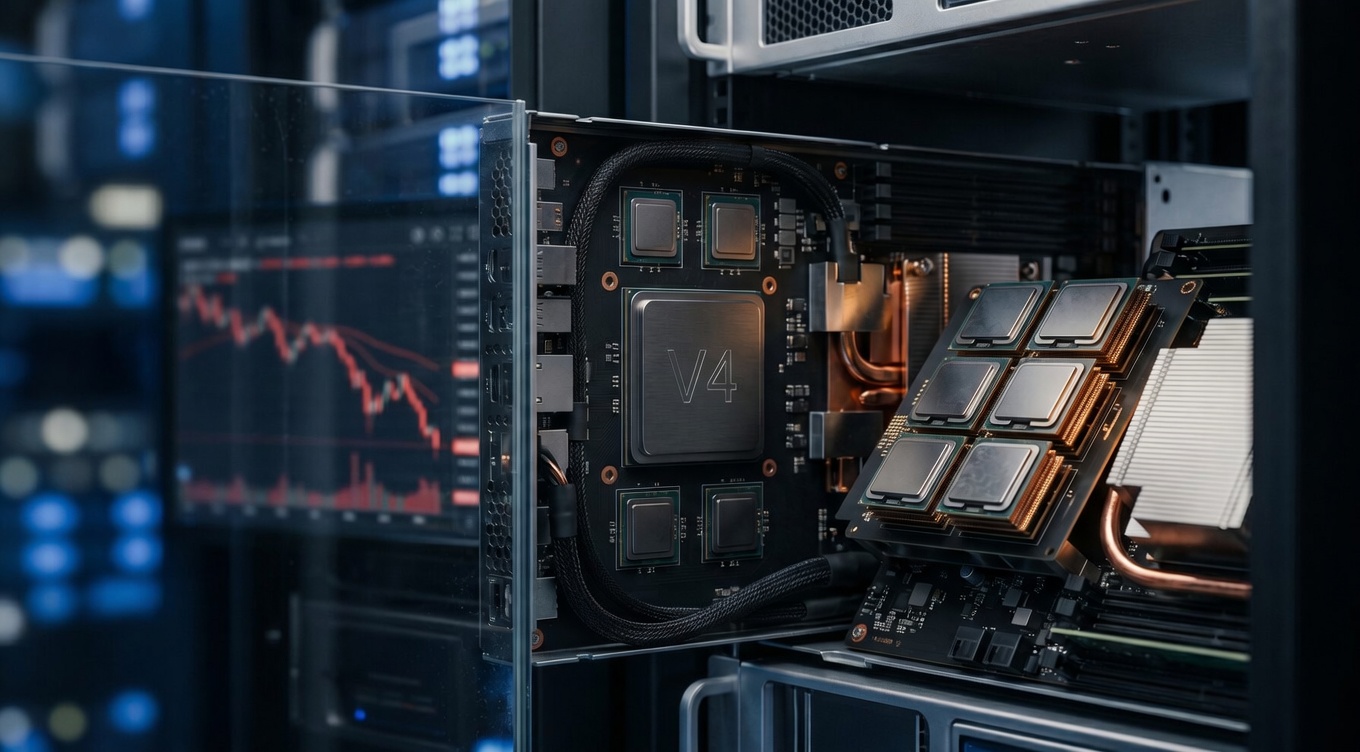
DeepSeek released a test preview of its open-source V4 model, pushing some Hong Kong AI stocks down and lifting chipmakers as investors questioned which processors trained the system.
On Friday, Hangzhou-based DeepSeek released a test preview of its open-source V4 model, giving developers early access. The model is available in two sizes, a larger “pro” version and a smaller “flash” edition. DeepSeek said V4 performs well on tasks involving AI agents, knowledge management and inference, and that it is compatible with common agent tools including Anthropic’s Claude Code. The company made the model code available for developers to download and run on their own systems.
Markets reacted quickly. Shares of Hong Kong-listed AI firms fell: Zhipu AI dropped about 8–9%, MiniMax fell roughly 7–8% and Manycore Tech slid around 9%. Chipmakers rose as investors anticipated stronger demand for semiconductors. Semiconductor Manufacturing International Corp. gained about 11% in Hong Kong trading and Hua Hong Semiconductor rallied more than 18%. On mainland exchanges, Cambricon Technologies and Moore Threads added 4–6% each, and Hygon Information Technology climbed over 10%.
A key question after the preview is which processors trained V4. Huawei confirmed that an Ascend 950-based supernode can support the V4 model and said its range of high-performance systems works with the V4 series. DeepSeek has not disclosed the hardware used for training. Chinese developers have faced restrictions on buying Nvidia’s most advanced chips since U.S. export controls took effect in 2022, and Beijing has promoted domestic alternatives.
DeepSeek is seeking outside capital for the first time and is in talks with a small group of strategic investors, including Tencent and Alibaba. The planned round is expected to raise a few hundred million dollars at a valuation above $20 billion. Company sources say the funding is aimed mainly at retaining researchers after several departures. Guo Daya, a lead author on the R1 paper, joined ByteDance, and Wang Bingxuan, a model-training veteran, moved to Tencent. Founder Liang Wenfeng, who has financed the company through his quantitative trading firm, is weighing a share buyback or a performance-based valuation if investor terms are not reached.
V4 follows DeepSeek’s R1 release in January 2025. The company reported that R1 matched or outperformed many leading models and said the team built it in two months for under $6 million using lower-grade Nvidia chips. That disclosure prompted questions about the scale of resources needed to build competitive models.
The V4 preview arrived one day after the White House accused China of large-scale theft of U.S. AI research. U.S. officials have alleged DeepSeek obtained restricted Nvidia chips and that some Western firms claim the company used proprietary model material without permission. The Chinese Embassy in Washington rejected those assertions, calling them “baseless allegations”.
Content on BlockPort is provided for informational purposes only and does not constitute financial guidance.
We strive to ensure the accuracy and relevance of the information we share, but we do not guarantee that all content is complete, error-free, or up to date. BlockPort disclaims any liability for losses, mistakes, or actions taken based on the material found on this site.
Always conduct your own research before making financial decisions and consider consulting with a licensed advisor.
For further details, please review our Terms of Use, Privacy Policy, and Disclaimer.
Tags
Articles by this author