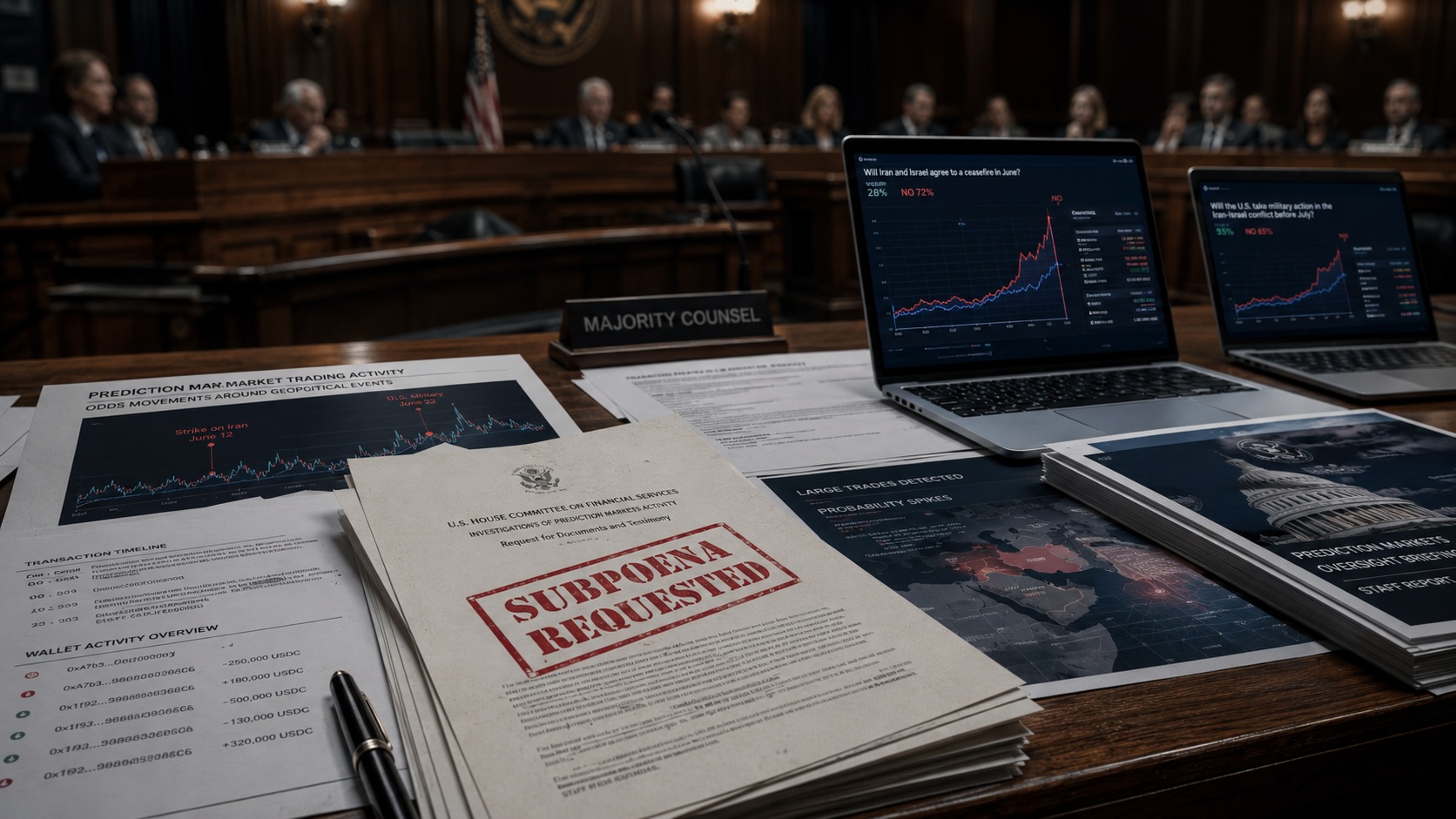
Arizona AG brings 20 charges against Kalshi for election bets

Arizona AG Kris Mayes brought 20 criminal counts against Kalshi, alleging illegal gambling and election wagering by Arizona residents; Kalshi calls the case meritless and cites federal oversight.
Arizona Attorney General Kris Mayes on Tuesday filed 20 criminal counts against prediction market operator Kalshi, accusing the company of running an illegal gambling operation in the state and taking bets on Arizona elections.
The attorney general’s office said the criminal information alleges Kalshi accepted wagers from Arizona residents on professional and college sports, individual player prop bets, and elections, all barred under state law. Four counts center on election wagering tied to the 2028 U.S. presidential race, the 2026 Arizona gubernatorial race, the 2026 Arizona Republican gubernatorial primary, and the 2026 Arizona Secretary of State race. Arizona prohibits unlicensed betting and bans wagering on elections.
Kalshi counters that its event contracts fall under the federal Commodity Exchange Act and are overseen by the Commodity Futures Trading Commission, which it argues preempts conflicting state restrictions. The company recently sued in federal court and contends the state filing arrived four days later to sidestep that case. A company spokesperson called the charges “seriously flawed” and described them as “gamesmanship.” “These charges are meritless, and we look forward to fighting them in court,” the spokesperson stated.
In a statement, Mayes argued that Kalshi is operating outside Arizona law: “Kalshi may brand itself as a ‘prediction market,’ but what it’s actually doing is running an illegal gambling operation and taking bets on Arizona elections, both of which violate Arizona law. No company gets to decide for itself which laws to follow.” She noted recent Kalshi lawsuits against Iowa and Utah and criticized the company for turning to federal court rather than state regulatory frameworks.
The confrontation highlights an ongoing dispute over whether state gambling statutes or federal derivatives rules govern real-money markets tied to future events. The CFTC has indicated that properly structured event contracts can fit within the federal derivatives framework. Courts, however, have not been uniform. In Ohio last week, Chief Judge Sarah D. Morrison of the U.S. District Court for the Southern District of Ohio denied Kalshi’s request for a preliminary injunction, writing that “History reveals no evidence that Congress intended to preempt state sports gambling laws.”
Prediction platforms drew wide attention during the 2024 U.S. elections as traders wagered on presidential and down-ballot outcomes. Outside the United States, scrutiny has increased as well; an Argentine court on Tuesday ordered a nationwide block on access to Polymarket, citing findings that the crypto-based venue operated as an unlicensed online betting system.
In Arizona, prosecutors allege Kalshi accepted bets from in-state residents without a state license and in categories Arizona law forbids. Mayes, a Democrat, has emphasized that election wagering is illegal under state statute and that her office will enforce the ban. Kalshi maintains that its federally regulated event contracts are distinct from traditional sports betting and intends to continue litigating in federal court while defending against the state charges.
As we covered previously, Kalshi sued Iowa Attorney General Brenna Bird and the Iowa Racing and Gaming Commission, alleging threats to block its sports event contracts and seeking a ruling that federal law preempts Iowa gambling rules. The company says it is a designated contract market regulated by the CFTC. Similar fights have yielded mixed results: an Ohio court denied Kalshi’s injunction, a Massachusetts court barred the contracts, Nevada sued Kalshi after an appeals court refused to halt state action, and federal judges in New Jersey and Tennessee issued temporary enforcement blocks.
Content on BlockPort is provided for informational purposes only and does not constitute financial guidance.
We strive to ensure the accuracy and relevance of the information we share, but we do not guarantee that all content is complete, error-free, or up to date. BlockPort disclaims any liability for losses, mistakes, or actions taken based on the material found on this site.
Always conduct your own research before making financial decisions and consider consulting with a licensed advisor.
For further details, please review our Terms of Use, Privacy Policy, and Disclaimer.
Tags
Articles by this author