Payment rails expand as agents make modest purchases
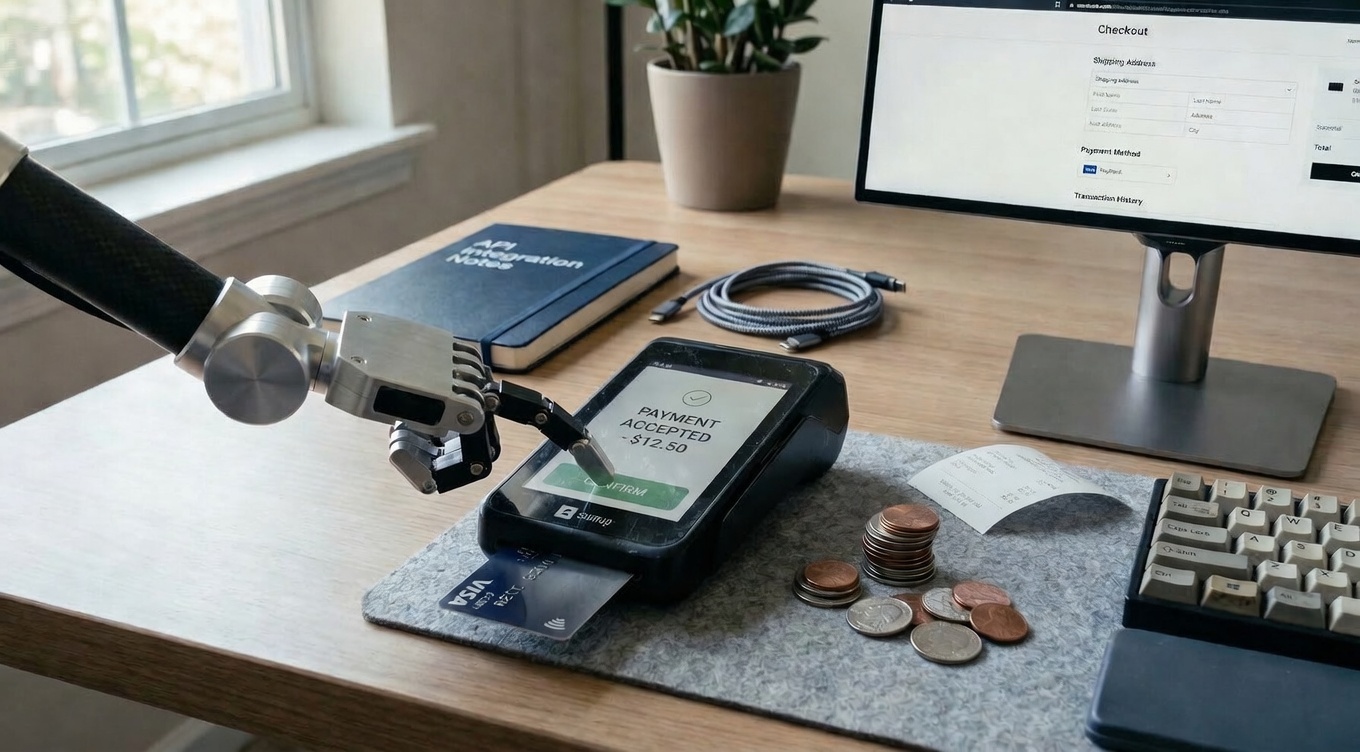
a16z reports AI agent payments near $1.6M after removing wash trades-about 90% below a prior $24M claim-while companies add support for Coinbase’s x402 and other agent rails.
Andreessen Horowitz partner Noah Levine posted on X that actual payment volumes made by artificial intelligence agents over a recent 30-day period totaled about $1.6 million after removing wash trades. Levine contrasted that figure with a previously reported $24 million number and with Allium Labs’ raw measurement of roughly $3 million for the same period.
Allium Labs’ raw total was about $3 million; filtering out wash trades reduced its estimate to about $1.6 million, Levine wrote. He noted the discrepancy reflects inconsistencies in how agent-to-agent commerce is measured. “The gap tells you how early-stage even the measurement infrastructure is,” Levine wrote.
Most agent payments to date are small, metered purchases for developer tools and AI services. Examples include Firecrawl, which charges about one cent per web-scraping query; Browserbase, which rents browser sessions for automated browsing; and Freepik, which sells image generation. These services commonly accept card payments. The x402 payment standard allows a developer or an autonomous agent to make a one-off purchase without a subscription, enabling programmatic, single-use transactions.
Payment rails and settlement networks are expanding while volumes remain modest. Stripe, Cloudflare and Vercel have integrated x402, and Google has embedded the system into its agent payments protocol. Coinbase added x402 Facilitator support on the Ethereum layer-2 network Polygon, enabling developers to accept USDC on Polygon as well as on Base and Solana. In a statement, Coinbase wrote, “Networks optimized for quick settlement and minimal fees are essential to make these machine-to-machine payments viable.”
Companies such as Alchemy have released tools that establish autonomous payment rails for agents on networks like Base. Agentic platforms and personal assistants, including Claude Code and OpenClaw, route many transactions, so human involvement remains common and many interactions are semi-autonomous.
Levine noted that $1.6 million is a small monthly total in absolute terms and observed that companies are building infrastructure with an eye to future demand. He wrote that firms are not betting on $1.6 million a month but on how volumes could change if agents become common buyers.
Measurement challenges, the presence of wash trades and concentrated use cases around developer tooling mean agent payment economics remain nascent while infrastructure adoption continues.
Content on BlockPort is provided for informational purposes only and does not constitute financial guidance.
We strive to ensure the accuracy and relevance of the information we share, but we do not guarantee that all content is complete, error-free, or up to date. BlockPort disclaims any liability for losses, mistakes, or actions taken based on the material found on this site.
Always conduct your own research before making financial decisions and consider consulting with a licensed advisor.
For further details, please review our Terms of Use, Privacy Policy, and Disclaimer.
Tags
Articles by this author