Coinbase presses UK to remove BoE limits on sterling stablecoins
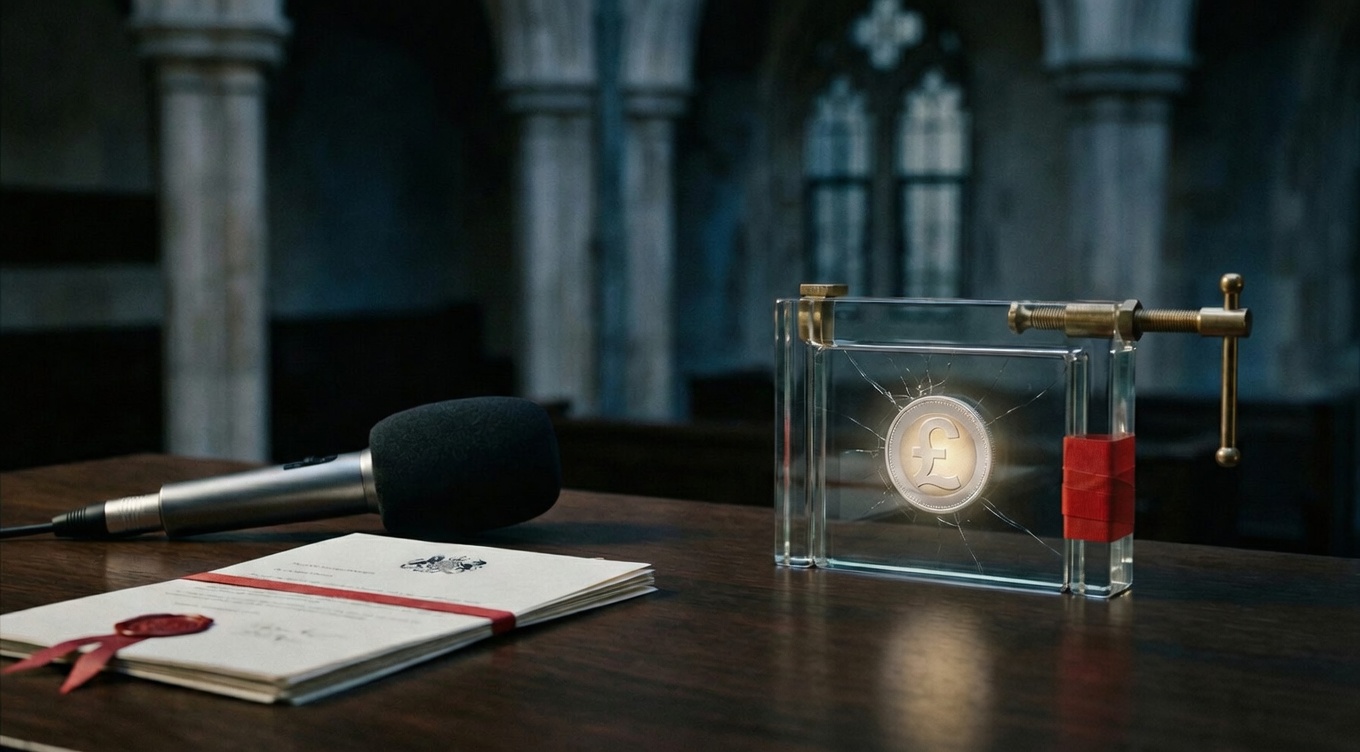
At a Lords hearing, Coinbase policy head Tom Duff Gordon urged UK regulators to drop the Bank of England’s caps on sterling stablecoins: £20,000 for individuals, £10 million for firms.
Coinbase vice president for international policy Tom Duff Gordon pressed UK regulators to drop the Bank of England’s temporary holding caps on systemic sterling stablecoins – £20,000 for individuals and £10 million for businesses – during a House of Lords hearing on Wednesday. He argued the limits would restrict scale and slow development of tokenized markets and payments.
Appearing before the House of Lords Financial Services Regulation Committee in London, Duff Gordon maintained that the gap between the government’s ambition and the rules under discussion is too wide. He called 2026 a key year as the rulebook is finalized and described stablecoins as a way to speed cross-border transfers and lower domestic payment costs.
In prepared remarks, he wrote: “A ten million pound cap on business holdings sounds significant until you consider the scale at which capital markets actually operate.” He added: “If sterling stablecoins cannot be held at meaningful scale, they cannot function as settlement infrastructure for tokenized gilts and bonds.”
Under the Bank of England’s proposal, the regime would apply only to sterling-denominated stablecoins that HM Treasury designates as systemic and that are used at scale in UK payments. In those cases, the Bank would oversee prudential and financial stability risks, while the Financial Conduct Authority would supervise conduct and consumer protection. Non-sterling stablecoins or tokens used mainly for crypto trading, such as USDT and USDC, would remain under the FCA and outside the Bank’s regime. The consultation describes the holding limits as temporary.
Duff Gordon argued that sterling stablecoins should be eligible for wholesale settlement of tokenized assets, including UK government bonds. If securities move onto blockchain rails, the cash leg needs to be tokenized via a central bank digital currency, tokenized deposits, or stablecoins, he added. He also pointed to the potential to support international use of sterling, noting that most stablecoins are dollar-based.
He outlined five proposals for policymakers: remove the holding caps; permit a larger share of reserves to be invested in short-dated UK government debt rather than only cash; enable use in wholesale settlement; pursue international equivalence so UK rules align with other major jurisdictions; and allow distributors such as crypto exchanges to pay rewards to stablecoin holders.
Addressing financial stability, Duff Gordon acknowledged that runs are possible but argued they are less likely and less damaging than bank runs when stablecoins are fully reserved and do not engage in maturity transformation. He pointed to the Bank of England’s idea of a liquidity facility that would let issuers repo high-quality liquid assets for cash during stress, reducing the chance of forced gilt sales.
Keith Grose, Coinbase UK CEO, emphasized the need for rules that work in practice, citing timely authorizations, proportionate requirements, and reliable access to banking and payments infrastructure. He cautioned that unclear requirements risk pushing activity offshore. “Well-calibrated regulation builds trust, keeps innovation onshore, and ensures the UK can compete in next-generation payments while reinforcing sterling’s role in the digital economy,” Grose stated.
The committee’s inquiry is part of a wider UK effort to build a regulatory framework for digital assets and tokenized markets. Duff Gordon and Grose argued that aligning the final rulebook with international standards and ensuring dependable access to banking and payments will shape whether activity remains in the UK as digital money and tokenized assets gain adoption.
Content on BlockPort is provided for informational purposes only and does not constitute financial guidance.
We strive to ensure the accuracy and relevance of the information we share, but we do not guarantee that all content is complete, error-free, or up to date. BlockPort disclaims any liability for losses, mistakes, or actions taken based on the material found on this site.
Always conduct your own research before making financial decisions and consider consulting with a licensed advisor.
For further details, please review our Terms of Use, Privacy Policy, and Disclaimer.
Tags
Articles by this author