Coinbase Exchange Review 2026: Who It’s Best For

Coinbase is one of the largest U.S.-based crypto exchanges. We found it to be a user-friendly platform, offering a stress-free way to turn cash into crypto thanks to rock-solid compliance and simple app design. The trade-off is the price tag: “instant buy” fees are noticeably steeper than what you’d find on complex pro platforms.
сrypto newcomers
сonvenience fees
On this page
Affiliate Disclosure
Some of the platforms we review pay us a commission if you register or take certain actions through our links. This helps fund our work. It doesn’t affect our opinions, how we test platforms, or our review scores. We apply the same criteria to every service we cover.
Editorial Independence and Transparency
Our goal is simple: provide clear, honest reviews of crypto exchanges and trading tools. To keep the lights on, we sometimes use affiliate links. If you sign up through one of them, we may earn a commission. This helps support our testing setup and editorial staff, but it doesn’t shape our verdicts. We base every review on our own testing and verified data – not on who we partner with.
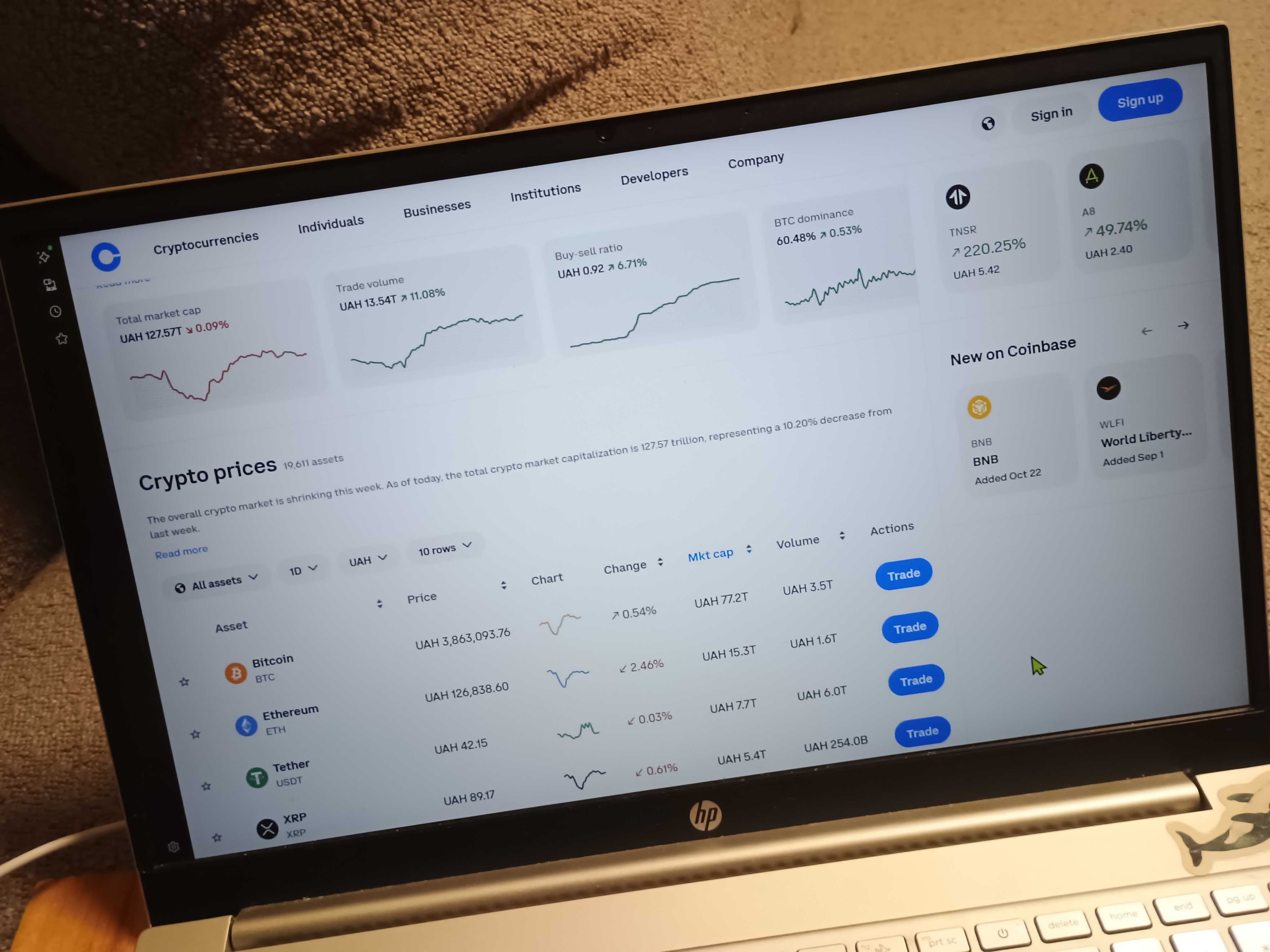
Coinbase stands out as a regulated, user-friendly crypto exchange offering seamless fiat access. While it is a magnet for mainstream adoption, our review investigates whether its spot trading fee structure and technical features hold up against cheaper competitors.
To provide a comprehensive assessment, we approached this review as typical crypto users would: opening an account, completing the verification process, funding the wallet, and executing approximately $200 in spot trades to gauge the real user experience. Our initial impression confirms the platform’s reputation as the largest U.S.-based exchange: it offers a clean user interface (UI), robust fiat-to-crypto rails, beginner-friendly mobile applications, and the inherent trust that comes with dealing with a publicly listed, regulated company.
What Is Coinbase?
Founded in 2012 by Brian Armstrong and Fred Ehrsam, Coinbase has grown into the largest U.S.-based cryptocurrency exchange and a publicly traded standard-bearer (NASDAQ: COIN) for the industry. As a bridge between traditional finance and the digital asset economy, it serves as the primary on-ramp for millions of retail users and institutional giants alike. But for the active trader in 2025, is Coinbase worth it?
When we dug into the fee surface – specifically using a $200 test buy – we encountered the same friction many advanced users report. The purchasing flow is seamless, but buying “the easy way” stacks up costs significantly compared to leaner, less regulated venues.
Fees, Limits, and Supported Cryptocurrencies
Coinbase structures its offering around safety and simplicity rather than infinite variety or rock-bottom pricing. This strategic choice directly dictates the platform’s ideal user base.
The most common question prospective users ask is: are Coinbase fees high? In our view, the answer depends entirely on your trading style:
- Simple Trade (“Instant Buy”): For the standard retail experience, you will pay a flat fee plus a spread that typically ranges from 0.50% to over 4.00% depending on the payment method (e.g., debit cards are pricier than bank transfers).
- Advanced Trade: Active traders get better terms, but they aren’t the cheapest in the industry. Base fees start at 0.40% Maker / 0.60% Taker for 30-day volume under $10,000. You typically need to trade over $100k monthly to see these drop significantly.
- Deposits & Withdrawals: ACH transfers are generally free for U.S. users, while wire transfers incur a $10 deposit and $25 withdrawal fee.
Coinbase currently supports over 470 cryptocurrencies, covering all major large-cap assets (Bitcoin, Ethereum, Solana) and a curated list of trusted altcoins. You won’t find thousands of speculative micro-caps here, a deliberate limit to maintain their “AA” regulatory safety rating.
Given this balance of premium fees and high-trust infrastructure, we identified two specific groups who benefit most:
- The “Safety-First” Investor: If you see crypto as just one pillar of a long-term portfolio, paying a 1% premium is often worth the peace of mind provided by a public U.S. company with standard regulatory compliance.
- Crypto Newcomers: The ease of use and wide fiat-on ramps make it the perfect starting point. You don’t have to guess if the platform is legitimate, and the “Simple Trade” interface removes the intimidation of order books.
If you value raw cost efficiency and want to day-trade with minimal drag, you should look at competitors like Kraken or Binance. But if you value regulation, reliability, and ease of access, Coinbase is the industry standard for a reason.
User Experience and Customer Support
If there is one area where Coinbase undeniably earns its premium fees, it is the user experience. In our testing, the platform remains the industry benchmark for usability, effectively functioning as the “Apple of crypto.”
We found the platform exceptionally intuitive, regardless of experience level. Coinbase cleverly segments its experience into two distinct modes within a single ecosystem:
- Coinbase (Simple): The default view is clean, uncluttered, and designed for the “buy and hold” investor. We appreciated how easy it was to link a bank account and execute a trade in under five minutes.
- Advanced Trade: With a simple toggle, we accessed the professional suite—complete with TradingView charts, depth charts, and granular order types. The ability to switch seamlessly between a beginner-friendly wallet and a pro-level trading desk on both desktop and mobile is a significant strength.
Customer service has historically been Coinbase’s Achilles’ heel, often cited in older reviews as slow or unresponsive. In 2025, the situation has improved, though a divide exists between free and paid users asking themselves “is Coinbase worth it”.
- General Access: We successfully connected to 24/7 live chat and phone support, a major upgrade from the email-only days. However, we still encountered aggressive automated triage – you often have to navigate several rounds of chatbot questions before reaching a human agent.
- Priority Support: It is worth noting that the best support experience is gated behind Coinbase One. Subscribers to this monthly service get “priority access,” effectively skipping the line. While we appreciate the efficiency, it does create a two-tier system where the fastest help is reserved for paying customers.
Pros, Cons, and Final Verdict
To summarize our findings, Coinbase effectively trades low-cost efficiency for high-trust convenience. While it may not be the cheapest venue for every transaction, its value proposition is clear for specific types of users.
Pros
What we liked
- Market Quality: Top-tier spot liquidity on majors (BTC, ETH) ensures fair execution prices for U.S. and EU users.
- Usability: A clear, beginner-friendly UI and mobile app experience that sets the industry standard.
- Access: Strong fiat rails and banking integrations for seamless funding in the U.S. and Europe.
- Tools: A robust Advanced Trade mode for users who eventually graduate to needing depth charts and granular order types.
- Trust: A large, reputable brand with public reporting, offering a level of safety many offshore competitors cannot match.
Cons
Where Coinbase might improve
- Cost: Retail and low-volume fees are not the cheapest and are often significantly higher than competitors’ instant-buy rates.
- Variety: Asset selection sits in the mid-to-high tier but lacks the “thousands of altcoins” found on more aggressive exchanges.
- Restrictions: Certain advanced features and products remain geo-restricted depending on your jurisdiction.
After testing the platform’s full funnel – from account creation to trade execution – our verdict is that Coinbase remains a highly reliable entry point into the crypto market. The combination of intuitive UX, solid fiat rails, and a regulation-first stance makes it a comfortable place to build positions in BTC, ETH, and other leading assets.
However, the answer to “is it worth it?” depends on your priority stack. If you value regulatory clarity, bank access, and “set it and forget it” simplicity above all else, Coinbase is an excellent choice. Conversely, if your priority is ultra-low fees or hunting for micro-cap tokens, it is smart to compare it against leaner competitors.
Ultimately, this Coinbase exchange review concludes that while you pay a premium for the privilege, the platform delivers a safety and ease-of-use standard that few others can rival in 2025.
Blockport’s Overall Coinbase Scorecard
| Criteria | Rating (out of 5) |
|---|---|
| Market Depth & Liquidity | 5 |
| Fiat Gateways & Accessibility | 5 |
| Asset Variety & Market Pairs | 4 |
| Trade Execution & Slippage | 4 |
| Platform Features & Charting | 4 |
| Trust & Regulatory Compliance | 4 |
| Fee Structure & Cost Efficiency | 2 |
Our Methodology: Ensuring an Objective Review
To provide a rating you can rely on, we employ a structured, category-based scoring model. By combining rigorous analysis of public documentation with live account testing, we distill our findings into a precise 1.0 to 5.0 star rating, calculated in 0.1 increments for maximum accuracy.
Data Collection Process
- Official Documentation Audit: We scrutinize public records, including fee schedules, asset directories, system status logs, regulatory filings, and security protocols.
- Live Market Testing: We go beyond the theoretical by executing approximately $200 in real spot transactions. This allows us to physically verify spreads, measure slippage, and evaluate the actual friction of the order-entry process.
Our ratings are a reflection of user experience, feature sets, and operational quality. We do not audit corporate solvency and make no guarantees regarding the long-term financial stability of the entities reviewed.
Categories & Weights
- Market Depth & Liquidity – 25%
- Fee Structure & Cost Efficiency – 25%
- Asset Variety & Market Pairs – 15%
- Trade Execution & Slippage – 10%
- Platform Features & Charting – 10%
- Fiat Gateways & Accessibility – 5%
- Trust & Regulatory Compliance – 10%
Content on BlockPort is provided for informational purposes only and does not constitute financial guidance.
We strive to ensure the accuracy and relevance of the information we share, but we do not guarantee that all content is complete, error-free, or up to date. BlockPort disclaims any liability for losses, mistakes, or actions taken based on the material found on this site.
Always conduct your own research before making financial decisions and consider consulting with a licensed advisor.
For further details, please review our Terms of Use, Privacy Policy, and Disclaimer.
Articles by this author