
BTCC Review 2025: Is This Crypto Exchange Worth It for Traders?

BTCC is one of the oldest active crypto exchanges, specializing in USDT-margined perpetual futures with leverage up to 150x and low base fees of about 0.03% for makers and 0.06% for takers. It offers strong liquidity on major pairs like BTC/USDT and ETH/USDT, plus an intuitive interface and a VIP program that cuts costs for high-volume traders. However, its spot market is relatively narrow, withdrawal fees are fixed, and overall transparency and regulation are more limited than on top-tier global platforms.
active derivatives and futures traders
limited spot market and fixed withdrawal fees
On this page
Affiliate Disclosure
Some of the platforms we review pay us a commission if you register or take certain actions through our links. This helps fund our work. It doesn’t affect our opinions, how we test platforms, or our review scores. We apply the same criteria to every service we cover.
Editorial Independence and Transparency
Our goal is simple: provide clear, honest reviews of crypto exchanges and trading tools. To keep the lights on, we sometimes use affiliate links. If you sign up through one of them, we may earn a commission.
This helps support our testing setup and editorial staff, but it doesn’t shape our verdicts. We base every review on our own testing and verified data – not on who we partner with.
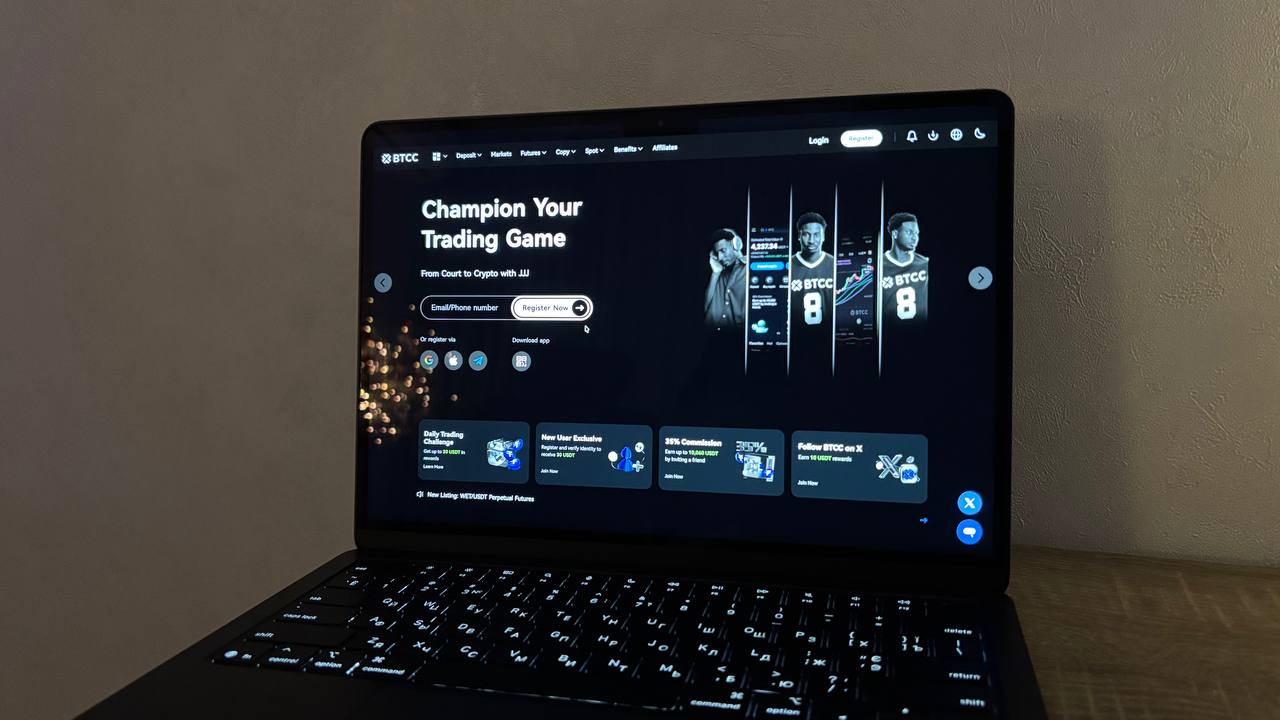
To evaluate BTCC from a real user’s perspective, we created a new account, completed verification, deposited USDT, and placed several spot and futures trades to see how the exchange performs in practice.
From the moment we began testing BTCC, the platform’s strengths were obvious: easy onboarding, fast deposits, and a clean, responsive trading interface on both web and mobile. Orders on core pairs like BTC/USDT and ETH/USDT filled near the quoted price with tight spreads, while leverage and margin controls were easy to adjust, making it simple to test different position sizes.
Introduction: What Is BTCC?
BTCC is one of the oldest operating crypto exchanges, launched in 2011. Once focused solely on Bitcoin trading, it has grown into a global platform based in the United Kingdom, serving clients worldwide.
The exchange specializes in derivatives – perpetual contracts and leveraged crypto futures – and also offers spot trading, mobile apps, and basic passive income tools.
In this BTCC exchange review, the Blockport team evaluates the platform from the perspective of active spot traders. We examine its reliability, order execution, fees, and interface, as well as its security, bonus programs, and contract types.
Read on to see which trading strategies BTCC best supports.
Fees, Rewards, and VIP Tiers
BTCC generates most of its revenue from derivatives trading fees. In this BTCC review, we examine its base rates, loyalty program, and hidden costs such as funding and withdrawal charges.
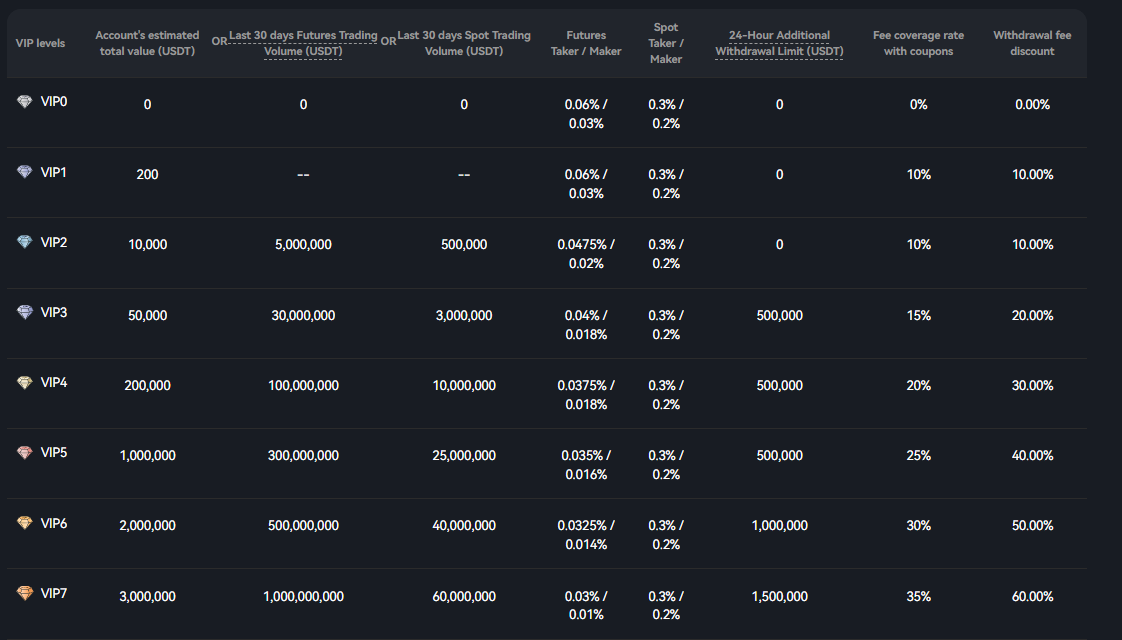
For futures, the exchange follows a maker/taker model. At the base VIP0 level, fees are about 0.06% for takers and 0.03% for makers. As trading volume or account balance increases, users move up to higher VIP tiers where fees gradually drop, reaching around 0.03%/0.01% at the top levels.
Spot trading fees are higher (roughly 0.30% for takers and 0.20% for makers at the entry level), making BTCC less appealing for spot-only traders compared to its derivatives market.
The VIP program features eight tiers, from VIP0 to VIP7. Advancement depends on either total account balance or a 30-day trading volume in USDT equivalent across spot and futures markets. Higher tiers unlock larger fee discounts and better withdrawal conditions.
Top-tier members gain extra benefits: higher daily withdrawal limits, partial fee rebates through coupons, withdrawal fee discounts of up to several dozen percent, and non-financial perks such as a personal account manager, priority support, gifts, and invitations to exclusive events.
Crypto deposits are free, but each asset has a minimum deposit limit. Transfers below that amount are not credited and, under exchange rules, may be permanently lost. Traders should always verify the current minimum deposit for each coin before sending funds.
Withdrawals carry a fixed fee in the asset’s native currency. The fee depends on the blockchain and may vary with network congestion, so users should check the actual rate on the withdrawal page before confirming a transaction.
In addition to these fees, traders on perpetual contracts pay or receive funding payments. On BTCC, funding is settled every eight hours: when the contract price is above the spot index, longs pay shorts; when it’s below, shorts pay longs.
Pros, Cons, and Final Verdict
In this part of the BTCC review, we take a practical look at how the exchange performs for spot traders. The focus is on execution quality, market depth, overall costs, and how the platform holds up over time, rather than on marketing claims.
We also evaluate the reliability of its infrastructure and how well BTCC meets the needs of two main groups: active daily traders and users seeking a stable platform for managing crypto.
Pros
- Established exchange. BTCC has been operating since 2011, making it one of the oldest active crypto exchanges. Over 14 years, it has weathered multiple market cycles without major client fund losses.
- Advanced trading tools. BTCC offers an intuitive terminal with detailed charts, order book depth, cross- and isolated-margin modes, a demo account, copy trading, and API access for bots and analytics.
- Tiered VIP program. Status levels offer increasing fee discounts, higher withdrawal limits, priority support, and extra perks such as special promotions and client events.
Cons
- Limited regulation and transparency. BTCC is not a public company and lacks top-tier licenses from the U.S. or EU. It also does not publish audited proof of reserves.
- Smaller spot market and high withdrawal fees. The spot section is narrower than on major competitors, with fewer than 100 liquid pairs, and fixed withdrawal fees on some networks can reach $5–10 per transaction.
- Reputational and operational concerns. Some reviews mention disputed liquidations and withdrawal delays, which may make the exchange appear riskier to conservative users.
Trustworthiness Check
Here are the legal cases and compliance news that we found.
- Exit from China due to regulatory pressure. BTCC, originally known as BTC China, was once one of Shanghai’s largest Bitcoin exchanges. In 2017, it halted operations in mainland China after the central bank tightened its rules, later shifting to an international model with entities based abroad.
- Current regulatory status. In its security section, BTCC lists registrations as a Money Services Business (MSB) with FinCEN in the United States and FINTRAC in Canada, along with Virtual Asset Service Provider (VASP) licenses in several EU countries, including a recent registration in Lithuania. These licenses require compliance with KYC/AML regulations and the segregation of client funds from company assets.
- Proof of reserves and asset storage. BTCC regularly releases Proof of Reserves reports using the Merkle tree method. Users can verify their balances through UID and snapshot data, and the exchange’s reserve ratio consistently exceeds 100%, meaning its crypto and stablecoin holdings surpass total client liabilities.
Blockport’s Overall BTCC Rating
| Criteria | Rating (out of 5) |
|---|---|
| Liquidity & Volume | 4 |
| Fees & Total Cost to Trade | 5 |
| Asset Selection & Trading Pairs | 3 |
| Execution Quality / Market Quality | 4 |
| Tools & Order Controls | 4 |
| Fiat Access & Minimum Trade Size | 3 |
| Reliability & Transparency | 4 |
Our Review Framework: How We Rate
To ensure consistency across all evaluations, we use a structured scoring system. Each rating combines independent research with hands-on platform testing to produce a final score on a 1.0–5.0 scale with 0.1-point precision.
How We Collect and Verify Data
- Platform and documentation analysis: we review Binance’s public materials, including fee tables, asset listings, system status logs, regulatory disclosures, and security documents, to verify how the platform functions in practice.
- Live market testing: we execute real trades to assess spreads, slippage, order execution, and overall platform friction. Testing in live conditions shows how Binance performs beyond its advertised claims.
Our scores reflect user experience, feature depth, and platform performance. We do not evaluate corporate solvency or make predictions about long-term financial stability.
Categories & Weights
- Liquidity & Volume – 25%
- Fees & Total Cost to Trade – 25%
- Asset Selection & Trading Pairs – 15%
- Execution Quality (Market Quality) – 10%
- Tools & Order Controls – 10%
- Fiat Access & Minimum Trade Size – 5%
- Reliability & Transparency – 10%
De inhoud op BlockPort wordt uitsluitend ter informatie aangeboden en vormt geen financieel advies.
We streven ernaar om de juistheid en relevantie van de informatie die we delen te waarborgen, maar we garanderen niet dat alle inhoud volledig, foutloos of up-to-date is. BlockPort wijst elke aansprakelijkheid af voor verliezen, fouten of acties die zijn ondernomen op basis van het materiaal op deze site.
Doe altijd uw eigen onderzoek voordat u financiële beslissingen neemt en overweeg om een erkende adviseur te raadplegen.
Raadpleeg voor meer informatie onze gebruiksvoorwaarden, ons Privacybeleid en onze Disclaimer.


