
Bitget Review 2026: Deep Liquidity, Copy Trading, and UEX Explained

Bitget is a high-volume derivatives and copy trading exchange with leverage up to 125x, more than 800 listed assets, and a 6,500 BTC protection fund supporting its security stack. It suits traders who want deep futures liquidity, advanced order types, and strategy automation more than simple buy-and-hold investing. The trade-off is higher risk: the platform is unavailable in many regions, and aggressive leverage combined with reported operational issues means strict risk management is essential.
experienced derivatives and copy traders
regional restrictions and outage risk
On this page
Affiliate Disclosure
Some of the platforms we review pay us a commission if you register or take certain actions through our links. This helps fund our work. It doesn’t affect our opinions, how we test platforms, or our review scores. We apply the same criteria to every service we cover.
Editorial Independence and Transparency
Our goal is simple: provide clear, honest reviews of crypto exchanges and trading tools. To keep the lights on, we sometimes use affiliate links. If you sign up through one of them, we may earn a commission.
This helps support our testing setup and editorial staff, but it doesn’t shape our verdicts. We base every review on our own testing and verified data – not on who we partner with.
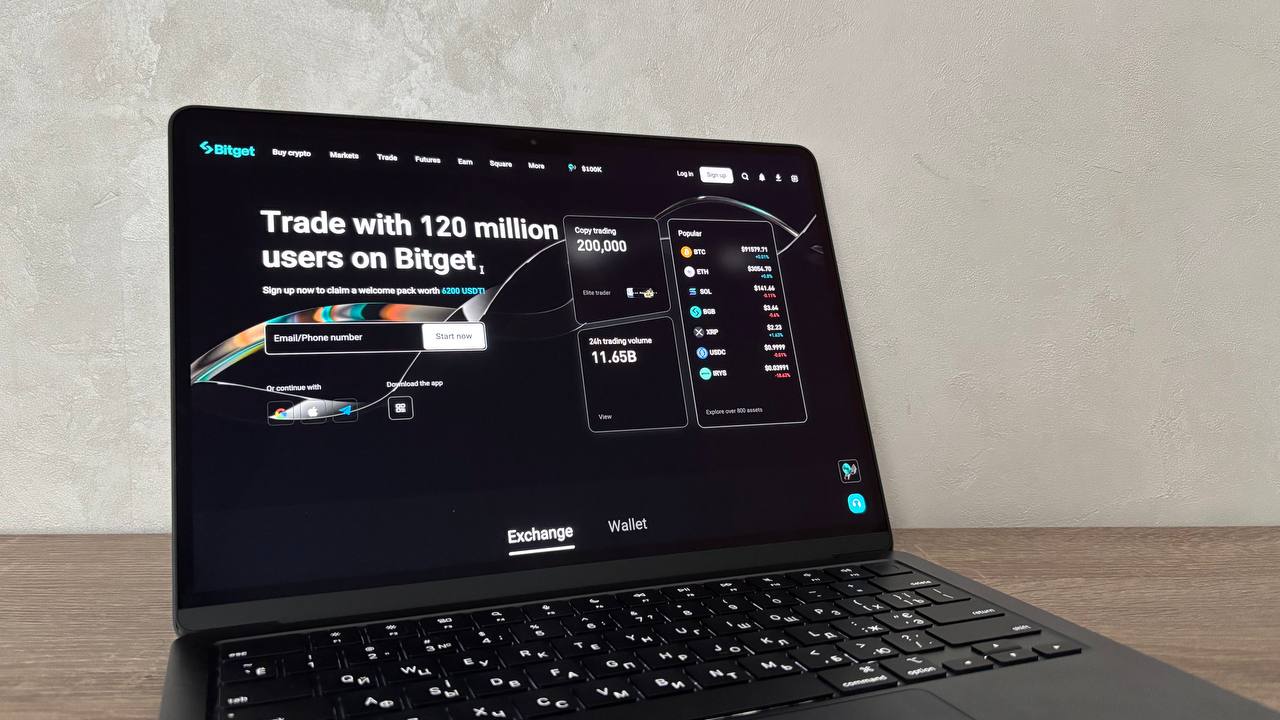
Bitget is a high-volume derivatives and copy trading exchange with deep futures liquidity, low base fees, and an ambitious UEX roadmap that extends beyond pure crypto.
What Is Bitget Trading Platform
Founded in 2018, Bitget is a global cryptocurrency exchange and Web3 company that presents itself as a “universal exchange” for spot, futures, copy trading, and on-chain access. The platform serves more than 120 million users in over 150 countries and regularly ranks among the top exchanges by trading volume, with daily activity around $20 billion and an estimated 7–8% share of the spot and derivatives market.
Bitget is best known for its derivatives and copy trading tools, offering hundreds of trading pairs, automated strategies, and a protection fund designed to backstop user assets.
More recently, the exchange has promoted its “Universal Exchange” vision, aiming to bring crypto, tokenized stocks and ETFs, forex, commodities, and other real world assets into a single account. In this Bitget exchange review, we focus on how that scale, liquidity, and feature set translate into day-to-day performance for active traders.
Trading Fees, Limits, and Available Cryptocurrencies
Bitget keeps its fee system straightforward: low base rates, optional BGB discounts, and clear limits on deposits and withdrawals. For beginners, this makes it easier to see what each trade will cost.
- For spot trading, the standard fee is 0.10% for both makers and takers. Paying fees in BGB, Bitget’s native token, reduces the rate to 0.08%. As volume increases, VIP tiers can lower these fees further, so active traders pay less over time.
- For futures trading, fees start at 0.02% for maker orders and 0.06% for taker orders, with additional reductions for higher VIP levels or BGB payments. Perpetual contracts also include a funding fee exchanged between long and short traders every eight hours, depending on market conditions. In copy trading, there is no extra trading fee, but you share a portion of your profit with the strategy provider, usually in the 10–20% range.
On the funding side, crypto deposits are free on Bitget’s end; you only pay blockchain network fees when sending funds. Withdrawal fees depend on the coin and network and are shown on the confirmation screen.
Bitget also supports fiat deposits and withdrawals in multiple currencies via bank transfers and payment partners. For example, EUR bank transfers typically have no deposit fee and a small fixed withdrawal fee, with clear per-transaction and daily limits so you know how much you can move.
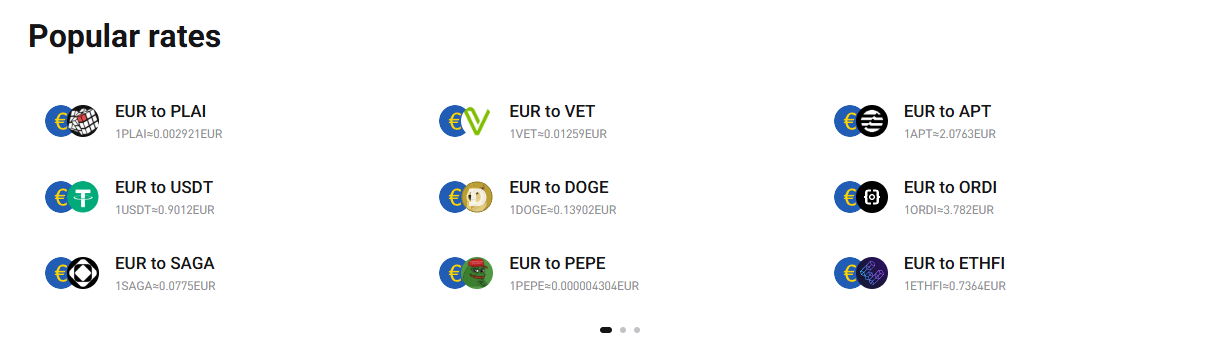
In terms of supported assets, Bitget lists more than 800 cryptocurrencies and over 900 spot pairs. You’ll find major coins like BTC and ETH, a wide range of altcoins, and new tokens added through launchpad and innovation listings. For new users, this means you can start with blue-chip assets and later explore more niche markets without switching platforms.
Trading Experience
Bitget is built for active trading rather than passive holding. The exchange combines spot, margin, and futures in one interface, with leverage up to 125x on selected contracts. It lists more than 800 coins and a wide range of pairs, supported by TradingView charts, order books, and core order types such as market, limit, stop, and conditional orders. A Unified Trading Account lets futures traders manage margin and PnL for multiple positions from a single balance.
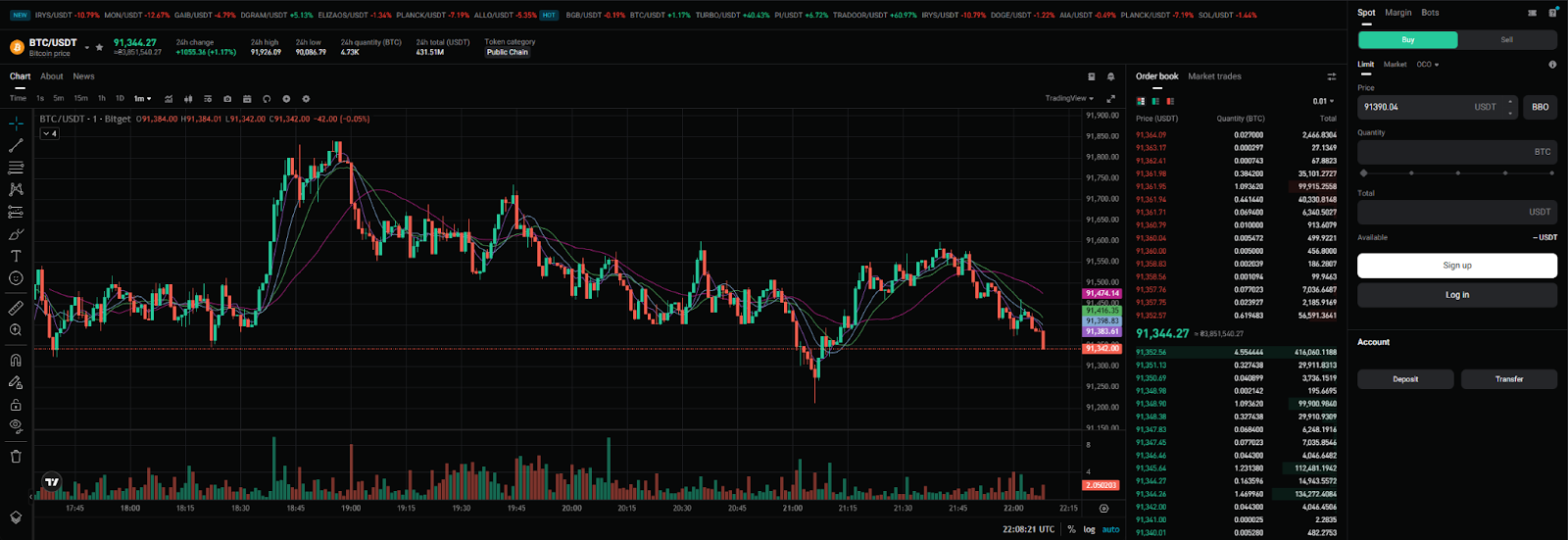
90,000 signal providers and around 800,000 followers, with more than 100 million copy trades executed. Users can mirror strategies in futures, spot, or bot-driven systems while setting their own position size, leverage, and risk caps.
On the usability side, the web and mobile apps are fast and straightforward, and Bitget scores around 4.6/5 on platforms such as TradingView for interface, fees, and copy trading.
Pros, Cons, And Final Verdict
This Bitget exchange review comes down to a clear trade-off: strong tools and security features on one side, and real operational and jurisdictional risks on the other.
Pros
- Security stack: Multi-sig cold storage for most assets, a 6,500 BTC protection fund, and live proof-of-reserves with coverage ratios well above 100% on BTC, ETH, USDT, and USDC.
- Volume and liquidity: Regularly ranks among the largest derivatives venues by open interest and daily volume. In October 2025, Bitget’s total reserves climbed to $7.83 billion with a $1.78 billion net inflow, the second highest among centralized exchanges. Nansen data put its monthly trading volume at $23.1 billion and second globally for institutional flow in BTC, ETH, SOL, and XRP.
- Product range: Spot, margin, futures up to 125x, structured products, and one of the most developed copy trading ecosystems on the market, plus an Earn section and launchpad access.
- Regulatory footprint: Registrations and approvals in multiple jurisdictions, including Australia (AUSTRAC), Italy (OAM), Poland, El Salvador, and others, with ongoing expansion.
- Universal Exchange vision. The UEX roadmap combines spot and derivatives with tokenized U.S. stocks, ETFs, forex pairs, commodities, and other real world assets under a single account. Together with the GetAgent AI tools and a protection fund of more than $700 million, Bitget is positioning itself as a multi asset venue rather than a strictly crypto-only exchange.
Cons
- Jurisdiction limits: Not available in the U.S. and blocked in many regions, including Hong Kong, Singapore, and several high-risk countries.
- User complaints and outages: Public feedback often cites frozen accounts, delayed withdrawals, and outages during high-volatility periods, which can translate into real losses for leveraged traders.
- No full independent audit: Despite strong proof-of-reserves and an AA external security rating, there is still no comprehensive third-party financial audit of Bitget Holdings.
- High-risk profile: Heavy use of high leverage and copy trading raises the odds of rapid, large drawdowns for inexperienced users.
After running through the platform end to end, from onboarding to live futures and copy trades, our verdict is straightforward. Bitget suits experienced traders who want deep derivatives liquidity, low fees, and an aggressive toolset, and who know how to manage leverage and counterparty risk. It is a weaker fit for beginners, users who need strong local regulation and clear recourse, or anyone unwilling to tolerate potential delays during stress events.
Used with discipline and realistic expectations, Bitget can be a powerful trading venue. Used casually, without risk controls, it is just as capable of amplifying mistakes as it is of magnifying profits.
Blockport’s Overall Bitget Rating
| Criteria | Rating (out of 5) |
|---|---|
| Market Depth & Liquidity | 4 |
| Fiat Gateways & Accessibility | 3 |
| Asset Variety & Market Pairs | 4 |
| Trade Execution & Slippage | 4 |
| Platform Features & Charting | 4 |
| Trust & Regulatory Compliance | 3.5 |
| Fee Structure & Cost Efficiency | 4 |
Blockport Scoring Method: How We Rate Bitget
To keep our Bitget exchange review consistent and unbiased, we use a structured scoring model with weighted categories. Each score combines desk research with hands-on testing and is reported on a 1.0 to 5.0 scale in 0.1-point increments.
How We Gather And Verify Data
- Public records review: We examine Bitget’s official documentation, including fee tables, asset listings, system status pages, regulatory disclosures, and security materials to verify how the exchange operates.
- Live trading tests: We open an account, complete verification, fund it, and place real spot, futures, and copy trades to measure spreads, slippage, execution quality, and any friction in the order process.
Our ratings reflect user experience, feature depth, and operational performance. We do not perform forensic financial audits and cannot guarantee the long term financial health of Bitget or any other exchange we review.
Evaluation Categories And Weighting
- Market Depth & Liquidity – 25%
- Fee Structure & Cost Efficiency – 25%
- Asset Variety & Market Pairs – 15%
- Trade Execution & Slippage – 10%
- Platform Features & Charting – 10%
- Fiat Gateways & Accessibility – 5%
- Reliability & Transparency – 10%
De inhoud op BlockPort wordt uitsluitend ter informatie aangeboden en vormt geen financieel advies.
We streven ernaar om de juistheid en relevantie van de informatie die we delen te waarborgen, maar we garanderen niet dat alle inhoud volledig, foutloos of up-to-date is. BlockPort wijst elke aansprakelijkheid af voor verliezen, fouten of acties die zijn ondernomen op basis van het materiaal op deze site.
Doe altijd uw eigen onderzoek voordat u financiële beslissingen neemt en overweeg om een erkende adviseur te raadplegen.
Raadpleeg voor meer informatie onze gebruiksvoorwaarden, ons Privacybeleid en onze Disclaimer.


