Four states advance bills targeting sweepstakes casinos
Tennessee, Oklahoma, Louisiana and Iowa sent bills to governors or to further votes to curb sweepstakes casinos, dual-currency payments and unlicensed gambling.
Lawmakers in Tennessee, Oklahoma, Louisiana and Iowa moved multiple bills this week aimed at sweepstakes casinos and other unlicensed gambling, sending measures to governors or to further legislative action.
Iowa’s Senate File 2289 was sent to the governor after passage. The bill would expand state regulators’ authority to investigate and enforce actions against operators running unlicensed gambling activities.
Louisiana approved House Bill 53 and sent it to the governor. The measure broadens racketeering tools linked to illegal gambling. Separately, House Bill 883, which targets sweepstakes casinos and dual-currency payment systems used by some operators, passed the House earlier this month and now awaits a third reading in the Senate.
In Tennessee, the House Speaker signed Senate Bill 2136, which bans sweepstakes-style casinos, and Senate Bill 1992, which addresses certain prediction market activity. Both bills previously cleared the Senate and now head to Gov. Bill Lee.
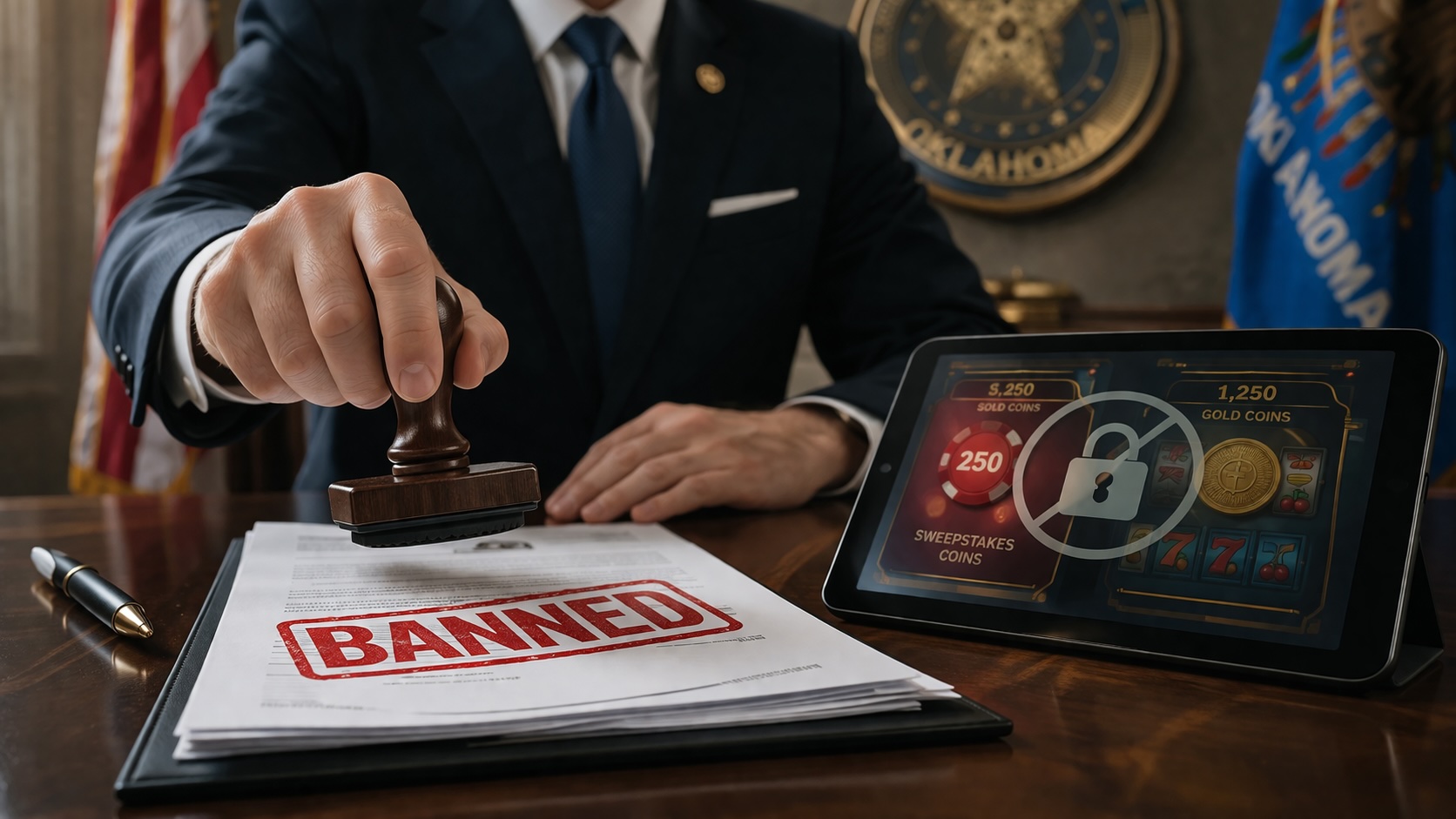
Oklahoma’s Senate Bill 1589 passed the House without amendments and was forwarded to Gov. Kevin Stitt. The Oklahoma measure focuses on dual-currency systems that sweepstakes operators use to separate promotional credit from cash value.
Supporters of the state bills described the measures as responses to the spread of unregulated gaming formats and said the laws would close enforcement gaps. Opponents in several states raised concerns about regulatory overreach and the impact on businesses that offer sweepstakes-style services.
In Colorado, lawmakers approved Senate Bill 163 to overhaul the state’s gambling regulatory structure. Committees also advanced Senate Bill 131, a responsible-gaming bill that would restrict certain advertising and limit deposit amounts. Lawmakers removed earlier provisions that would have banned proposition bets and restricted sportsbooks from limiting sharp bettors.
Connecticut’s legislature approved House Bill 5229, which limits gambling advertising on college and university campuses and includes other online wagering reforms. The state also passed Senate Bill 296, which expands the cheating statute to cover rigging tied to sports betting, match-fixing, collusion and misuse of confidential information. Both bills await formal enrollment before being sent to Gov. Ned Lamont.
In Missouri, the Senate rejected House Bill 2989, a plan to legalize video lottery terminals that supporters had pitched as replacements for unregulated skill-game machines. Lawmakers also advanced House Bill 3553 but removed language that would have raised the online sports-betting tax rate from 10% to 34%.
The District of Columbia held a hearing on an online casino proposal that includes limits on sweepstakes casinos. Supporters framed the bill as a way to reduce illegal gambling and raise tax revenue; advocates and industry representatives raised concerns about problem gambling and the proposed limits. In New Jersey, lawmakers introduced companion bills that would impose temporary surcharges tied to the 2026 FIFA World Cup, including a 10% surcharge on online sports-betting revenue from tournament wagers.
Several bills will require additional legislative votes or executive approval before taking effect. The measures span criminal penalties, enhanced investigative authority, advertising limits, deposit caps and potential tax or surcharge changes tied to major events.
Content on BlockPort is provided for informational purposes only and does not constitute financial guidance.
We strive to ensure the accuracy and relevance of the information we share, but we do not guarantee that all content is complete, error-free, or up to date. BlockPort disclaims any liability for losses, mistakes, or actions taken based on the material found on this site.
Always conduct your own research before making financial decisions and consider consulting with a licensed advisor.
For further details, please review our Terms of Use, Privacy Policy, and Disclaimer.
Articles by this author