December 2025 blockchain conferences address Layer-2, security

Three blockchain conferences scheduled for December 2025 in Abu Dhabi, India, and the MENA region feature technical programming on Layer-2 scaling solutions, smart contract security frameworks, protocol interoperability, and blockchain infrastructure development.
December 2025 blockchain conferences provide technical programming on scaling solutions, security implementations, and protocol development. Three events scheduled across Abu Dhabi and India address infrastructure challenges facing production blockchain systems, with sessions targeting protocol developers and blockchain engineers.
Global Blockchain Show Abu Dhabi: December 10-11
Global Blockchain Show Abu Dhabi runs December 10-11, 2025, with technical tracks addressing decentralized finance infrastructure, blockchain scalability implementations, and Web3 protocol development. Technical programming includes “Building a World with Endless Blockchains”, examining multi-chain architecture patterns and interoperability standards for heterogeneous blockchain networks. The blockchain scalability track covers Layer-2 implementations, including optimistic rollups, zero-knowledge rollups, and state channel architectures, addressing throughput optimization and data availability solutions.
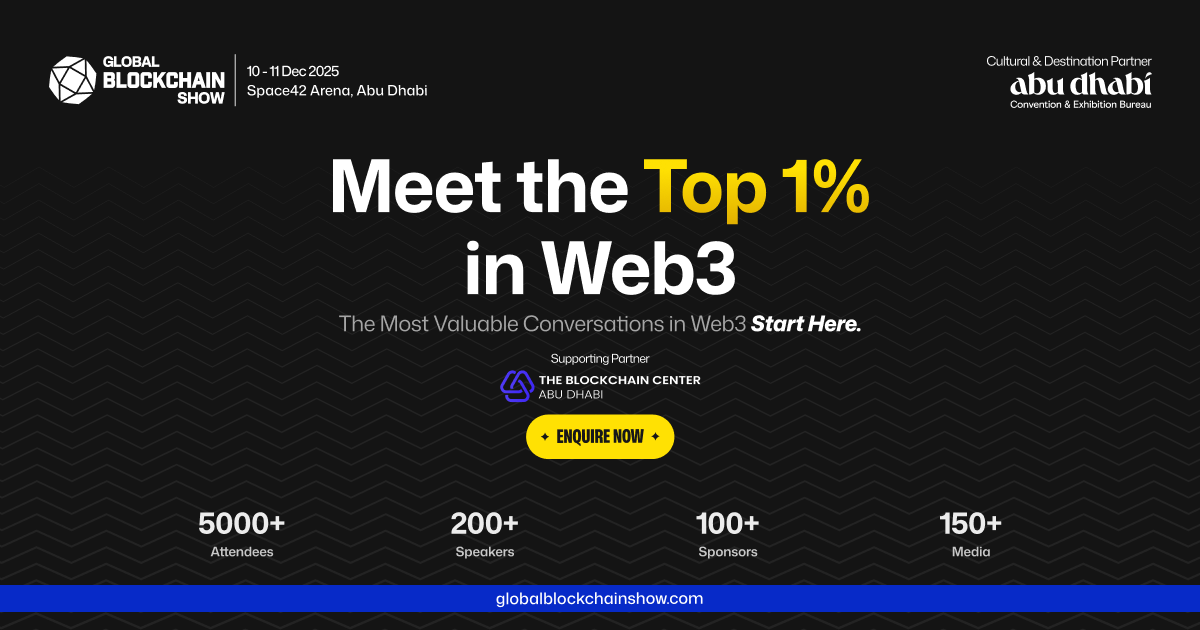
Smart contract security workshops provide hands-on experience with vulnerability identification, formal verification methods, and automated security testing. The “Exchanges at the Helm” panel examines technical infrastructure for exchanges, covering order matching engines, liquidity aggregation, and MEV mitigation strategies. Sessions on tokenization address asset tokenization protocols, algorithmic stablecoin mechanisms, and oracle integration for price feeds. DAO infrastructure sessions cover on-chain governance implementations and treasury management protocols.
India Blockchain Week: December 1-7
India Blockchain Week runs December 1-7, 2025 in Bangalore, It incorporates multiple technical sub-events. ETHIndia functions as an Ethereum-focused hackathon addressing EVM development, smart contract optimization, and EIP implementations. Polygon Connect provides dedicated programming on Polygon’s zkEVM implementation, examining proof generation optimization and zero-knowledge circuit development.
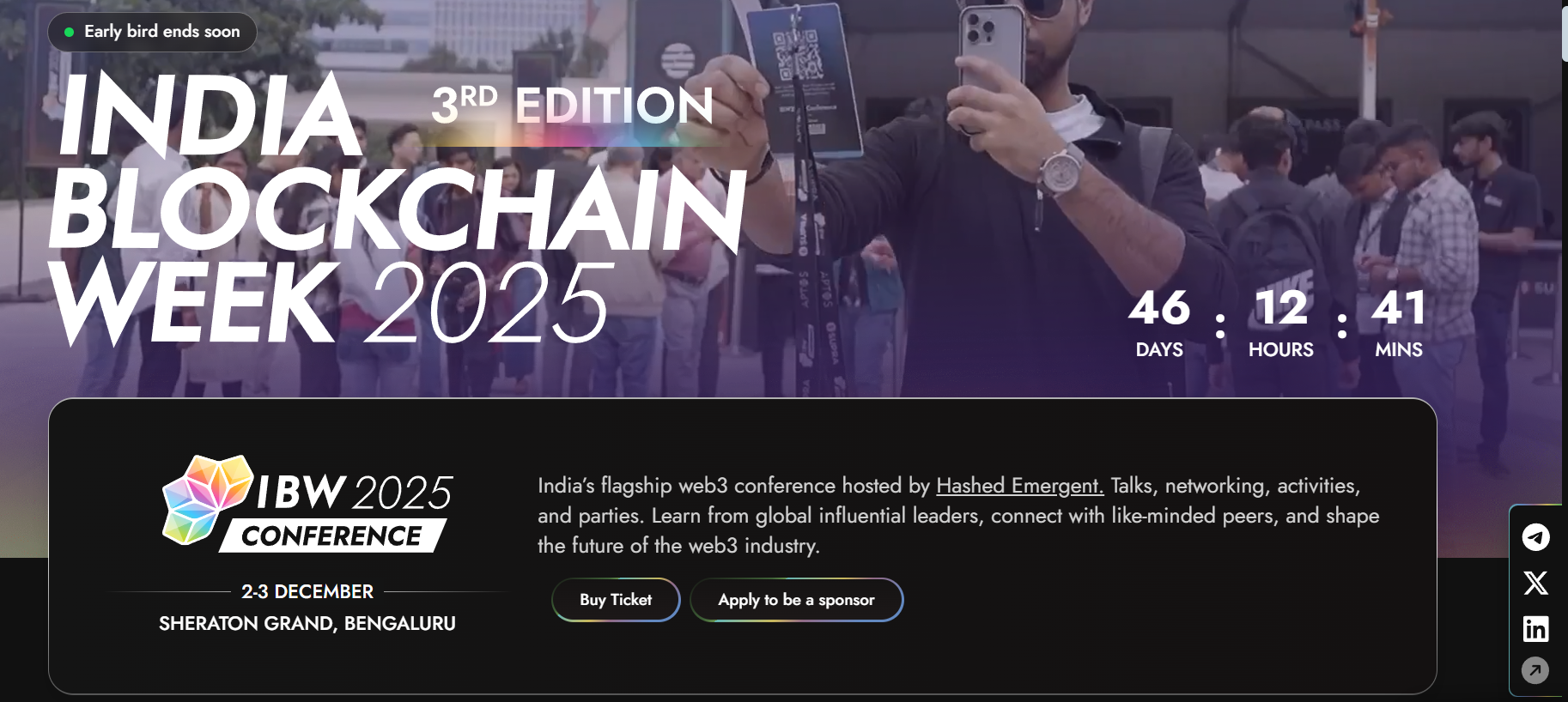
The core IBW 2025 Conference takes place December 2-3 at Sheraton Grand Bangalore. Avery Ching from Aptos presents on Move programming language architecture and Block-STM consensus mechanisms enabling high transaction throughput. Keone Hon from Monad discusses parallel transaction processing approaches that differ from traditional sequential execution. Sandeep Nailwal from Polygon covers zkEVM technical architecture and engineering challenges in creating EVM-compatible zero-knowledge rollups. Chen Fang from BitGo examines multi-signature custody implementations for institutional-grade security infrastructure.
Technical tracks address consensus algorithm implementations beyond proof-of-stake, blockchain gaming infrastructure, cryptocurrency regulation’s technical implications including KYC/AML integration, and cross-chain bridge security. Programming targets developers working on Web3 adoption challenges in emerging markets.
Bitcoin MENA: December 8-9
Bitcoin MENA Conference takes place December 8-9, 2025 at ADNEC, focusing on Bitcoin protocol development and Lightning Network implementations. Technical programming addresses Lightning Network channel management, routing optimization, and atomic swap implementations. Sessions cover payment channel liquidity, channel factories, and submarine swaps for trustless exchange between on-chain and Lightning transactions.

Bitcoin Script developments receive attention through advanced scripting patterns, Taproot utilization, and covenant proposals for Bitcoin smart contract functionality. Mining infrastructure discussions address ASIC efficiency, Stratum v2 enhancements, and energy optimization for proof-of-work systems. Custody-solution sessions examine multi-signature schemes and institutional custody architecture for Bitcoin-specific security requirements.
Layer-2 scaling implementations
Optimistic rollups sessions cover fraud proof mechanisms, challenge periods, and exit security models. Technical discussions address state transition verification and data availability guarantees. The fraud proof window presents a tradeoff between security and withdrawal speed that developers must understand when building on optimistic rollup infrastructure.
Zero-knowledge rollups programming includes zkSNARK and zkSTARK implementations, proof generation optimization, and recursive proof composition. Polygon Connect specifically addresses zkEVM architecture and engineering challenges of achieving EVM equivalence while maintaining proof generation efficiency. State channels are also covered through Lightning Network sessions and generalized Ethereum implementations, revealing different tradeoffs in capital efficiency and user experience.
Smart contract security frameworks
Security-focused sessions address persistent vulnerabilities in production smart contracts. Reentrancy protection implementations cover the checks-effects-interactions pattern and architectural approaches that eliminate reentrancy risks at the protocol design level. Access control mechanisms sessions examine role-based access control implementations, multi-signature requirements, and time-locked administrative functions providing security against compromised keys.
Oracle security addresses price manipulation resistance, data source validation, and fallback mechanisms for handling external data dependencies. Sessions cover aggregation strategies, outlier detection, and circuit breaker mechanisms for detecting oracle failures. Formal verification sessions provide mathematical proofs of smart contract correctness using tools like Certora and K Framework, covering specification languages that express contract invariants and verification workflows.
Automated testing workshops cover fuzzing techniques, symbolic execution for vulnerability discovery, and continuous security testing integration. Tools like Echidna, Manticore, and Mythril receive hands-on treatment. The combination of automated testing with manual review and formal verification provides defense in depth for smart contract security.
Protocol interoperability and consensus developments
Cross-chain communication is a major focus through bridge architectures examining lock-and-mint versus burn-and-mint patterns and bridge validator set designs. Security discussions address bridge exploits and mitigation strategies including multi-signature requirements and anomaly detection. Cross-chain messaging protocols sessions cover IBC, LayerZero, and other messaging layers enabling cross-chain application development.
Beyond standard Proof-of-Stake, sessions address Byzantine Fault Tolerance variants including HotStuff, Tendermint, and other BFT implementations with different performance tradeoffs. Parallel execution sessions feature Aptos’ Block-STM and Monad’s approaches for improving throughput without sacrificing determinism. The challenge of detecting and resolving transaction conflicts in parallel execution models receives detailed examination. DAG-based consensus approaches including Avalanche and IOTA’s Tangle receive examination for high-throughput scenarios.
Development frameworks and tooling
Move language development sessions cover Move’s resource-oriented programming model and formal verification capabilities built into the language. The contrast between Move’s resource model and Solidity’s account model reveals different approaches to preventing common vulnerability classes. Solidity optimization workshops address gas optimization techniques and assembly usage for critical sections.
Rust for blockchain sessions cover Substrate framework development for Polkadot parachains and Solana program development. Workshops on testing frameworks cover Hardhat, Foundry, and other environments, including integration testing strategies and fork testing against mainnet state. The importance of comprehensive testing receives emphasis given the immutability of deployed smart contracts.
Workshop formats and practical applications
Conferences offer hands-on technical sessions typically running two to three hours with code examples and practical exercises. Security auditing workshops provide vulnerability identification in smart contracts using manual review and automated tools. Layer-2 development workshops cover building applications on rollups and state channels, with participants deploying contracts to testnets and learning cross-layer communication patterns.
Cross-chain development workshops implement multi-chain applications using bridge protocols, teaching developers to handle state synchronization and transaction ordering challenges. Protocol contribution workshops cover contributing to open-source blockchain protocols and navigating codebases like Geth, Prysm, or Substrate.
Registration and access tiers
Global Blockchain Show Abu Dhabi offers three ticket categories differentiated by workshop access and networking opportunities. The VIP Pass provides full access to technical workshops, dedicated networking sessions with speakers, and priority seating for hands-on sessions. Festival Plus Pass includes standard workshop access and general networking areas. Festival Pass covers keynote sessions and exhibition areas without workshop participation. Early registration typically offers reduced pricing compared to on-site purchases.
India Blockchain Week operates through individual event registrations for ETHIndia, Polygon Connect, and the core IBW Conference. Hackathon participants register separately from conference attendees. Technical workshop sessions may have capacity limits requiring advance registration beyond general conference access.
Bitcoin MENA provides standard conference passes and a Whale Pass tier offering extended networking access and dedicated meeting spaces. Technical track access is included across pass types, with differentiation primarily in networking infrastructure rather than session availability.
Registration details and current pricing are available through respective conference websites. Some events offer group registration discounts for teams from the same organization or protocol development group.
December 2025 technical blockchain conference schedule:
December 1-7: India Blockchain Week, Bangalore (ETHIndia, Polygon Connect)
December 2-3: IBW 2025 Conference, Sheraton Grand Bangalore
December 8-9: Bitcoin MENA, ADNEC Abu Dhabi
December 10-11: Global Blockchain Show Abu Dhabi
Technical focus areas include Layer-2 scaling through optimistic rollups, zk-rollups, and state channels, smart contract security via formal verification and vulnerability testing, protocol interoperability through bridges and cross-chain messaging, consensus mechanisms including BFT variants and parallel execution, and development frameworks covering Move, Solidity, and Rust.
Key technical speakers include Avery Ching from Aptos, Keone Hon from Monad, Sandeep Nailwal from Polygon, and Chen Fang from BitGo.
Registration and tickets: Global Blockchain Show Abu Dhabi
Content on BlockPort is provided for informational purposes only and does not constitute financial guidance.
We strive to ensure the accuracy and relevance of the information we share, but we do not guarantee that all content is complete, error-free, or up to date. BlockPort disclaims any liability for losses, mistakes, or actions taken based on the material found on this site.
Always conduct your own research before making financial decisions and consider consulting with a licensed advisor.
For further details, please review our Terms of Use, Privacy Policy, and Disclaimer.
Articles by this author